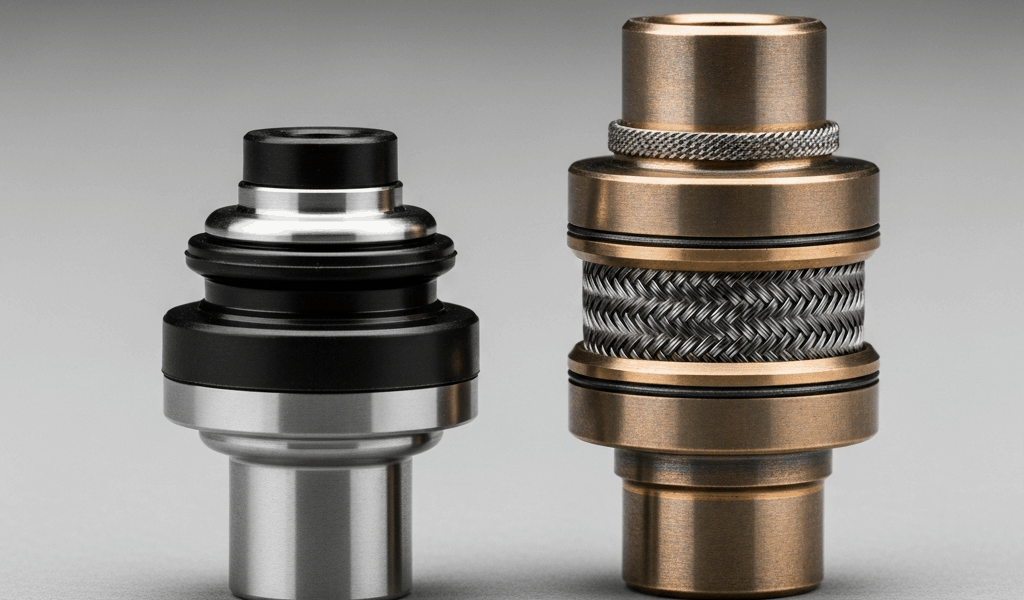
Best Prop Shaft Seal for Boats — Dripless vs Traditional Packing
Prop shaft seals have become tricky with all the manufacturer marketing and forum mythology flying around. Ask ten sailors which system is better and you’ll get ten different answers — most of them based on whatever that person installed years ago and never questioned since. As someone who has pulled apart a rotting flax packing gland on a 1987 Hunter 34 and later wrestled a PSS dripless seal onto a Catalina 42 in a marina parking lot, I worked through the fundamentals of this particular argument. Not from spec sheets. From actual boats.
This article includes affiliate links. We may earn a commission at no extra cost to you.
Dripless Shaft Seals — How They Work
But what is a dripless shaft seal? In essence, it’s a mechanical face seal that keeps water out without any dripping. But it’s much more than that — it’s a system with real alignment demands that’ll punish you if you ignore them.
The two brands you’ll actually encounter are PSS (Professional Shaft Seal) and Tides Marine’s SureSeal. Both run on the same basic idea — a carbon graphite ring presses against a polished stainless steel rotor collar bonded to the shaft, and an EPDM rubber bellows keeps that carbon face in consistent contact with the collar. Water stays out. Nothing drips. That’s it.
PSS is probably the most common dripless option on production sailboats in the U.S. Sizes run from 3/4 inch shaft diameter up to 2 inches. Installation means sliding the stainless rotor onto the shaft, locking it down with set screws, then connecting the bellows housing to the stuffing box flange or stern tube. The carbon face rides against that rotor under light spring tension from the bellows itself — simple in theory, fussy in practice.
Tides Marine’s SureSeal takes a slightly different approach. The rotor integrates differently and the whole product line is designed to handle more shaft-angle variation — which matters enormously on older boats where engine alignment has wandered over the years. Both manufacturers publish shaft angle tolerances. Both seals will fail early if you ignore those numbers. Apparently a lot of people do.
The zero-drip claim is real, for what it’s worth. A properly installed dripless seal on a shaft with decent alignment genuinely does not let water into the bilge. Not a drop.
For anyone who has cracked open a bilge after a two-week passage and found standing water they couldn’t account for, that’s not nothing.
What Dripless Seals Require to Work Properly
- Shaft runout under 0.005 inches — any more and the face seal loses consistent contact
- Proper shaft angle alignment within the manufacturer’s specified range — typically 3 to 7 degrees depending on the model
- The stainless rotor collar positioned correctly on the shaft — not crowding the cutless bearing, not straining the bellows housing
- Annual bellows inspection for cracking or UV deformation, especially on boats where the stern tube gets sunlight
- Carbon face and bellows replacement every 5 to 7 years, sooner on boats that actually get sailed hard
Quick callout up front. Most dripless seal failures I’ve read about — and one I watched unfold personally on a friend’s Beneteau 40 in Annapolis — traced back to skipped alignment checks. The seal was fine. The installation was sloppy. Different problem entirely.
Traditional Packing Glands — The Old Reliable
Stuffed with flax or GFO packing, the traditional stuffing box has been keeping boats afloat since before fiberglass existed. There’s something almost stubborn about how simple it is. You compress strands of packing material — either wax-impregnated flax rope or modern GFO (Gore-Tex fiber overbraided) packing — around the shaft inside a bronze gland housing. Tighten the gland nut, packing squeezes against the shaft, seal forms. Done.
The expected drip rate on a properly adjusted packing gland is 2 to 4 drops per minute at rest, more when the shaft is spinning. That’s not a defect — that’s the system working correctly. The drip lubricates packing material against the shaft. Without it, the packing overheats and burns, and the shaft gets scored underneath. A dry packing gland is actually the problem, not the solution.
GFO packing uses PTFE-based fiber instead of traditional flax. Runs cooler, lasts longer, tolerates slight misalignment better than flax does. A pack of GFO for a 1-inch shaft runs $20 to $35 at most chandleries — West Marine stocks it, every online marine supplier stocks it. The labor to repack a stuffing box yourself is maybe two hours with basic tools, assuming you’re comfortable working in tight spaces under the companionway stairs.
Flax vs GFO — The Practical Difference
Flax is cheaper and traditional. GFO runs cleaner, lasts longer, and doesn’t swell unpredictably when it gets wet. That’s what makes GFO endearing to us traditionalists who aren’t ready to abandon the stuffing box entirely — same installation process as flax, meaningfully better performance, no philosophical compromise. I switched a 1980 Pearson 365 from flax to GFO a few years back. The gland stayed properly adjusted for nearly two full seasons before needing another quarter turn on the nut. With flax on the same boat, I was under there every couple of months.
There’s also a middle-ground option worth knowing about — dripless stuffing box conversion kits from manufacturers like Lasdrop, which replace the packing material with a lip seal arrangement inside the existing bronze housing. Not quite a full mechanical face seal, but eliminates the drip when installed correctly. Worth considering if you want a dry bilge but aren’t ready to spend PSS money.
Cost, Installation, and Maintenance Compared
This is where things get concrete. Real numbers, not ranges pulled from nowhere.
Dripless Seal Costs
A PSS dripless seal for a 1-inch shaft — common on mid-size sailboats — runs $175 to $220 from retailers like Defender or Sailing Pro. A 1.25-inch version for something larger pushes $250 to $300. Add professional boatyard installation and you’re looking at $400 to $600 total, sometimes more depending on how difficult access is. Tides Marine SureSeal prices are comparable.
Convinced by the zero-drip promise after finding bilge water I couldn’t explain following a two-week cruise down the Chesapeake, I installed the PSS on the Catalina 42 myself — saved the labor cost but spent an entire Saturday watching alignment videos on my phone and triple-checking rotor position with calipers. Worth it. Not something you rush, though. Don’t repeat what I did of starting that job at 2pm.
Traditional Packing Gland Costs
A complete repacking job using GFO material runs $20 to $50 in materials. If the bronze gland housing is corroded past usefulness, replacement costs $80 to $150 depending on shaft size. Professional repacking at a yard runs maybe $100 to $200 in labor — it’s fast work once the boat is hauled. Total cost for a full packing gland refresh: under $250 in almost every situation. Usually much less.
Ongoing Maintenance Reality
- Dripless seals — check the bellows annually for cracking, inspect the rotor surface for scoring, budget for a full rebuild every 5 to 7 years ($80 to $150 in parts if you do it yourself)
- Traditional packing — adjust the gland nut every few weeks initially, then every few months once it settles; full repack every 2 to 4 years depending on use
- Dripless seals — bellows failure offshore means water ingress that requires hauling or a jury-rigged packing fix you really don’t want to improvise at sea
- Traditional packing — if it starts dripping more than expected, tighten the nut; replacement materials exist in every marine store on the planet
That last point isn’t theoretical hand-wringing. A bellows failure on a dripless seal brings water in faster and with less warning than a packing gland that’s simply worked itself loose. Experienced bluewater sailors often carry spare GFO packing and keep a traditional stuffing box on passage-making boats for exactly this reason. Simplicity is a genuine virtue when you’re 400 miles from the nearest chandlery.
The Alignment Question
Dripless seals punish misalignment. Traditional packing tolerates it. That’s the most important mechanical difference between these two systems — and the one most people skip past when they’re reading comparison threads at midnight. Aging engine mounts, visible shaft runout when you spin it by hand, any history of cutless bearing problems — all of that makes a dripless seal a harder installation and a higher-risk proposition. A traditional packing gland keeps doing its job even when alignment has drifted.
The Verdict — Which Should You Install
There’s no clean universal answer here. But the conditions that point toward each option are specific enough to actually be useful, which is more than most of these comparisons give you.
Install a Dripless Seal If
- You’re fitting out a new boat or doing a serious refit where engine alignment is being set fresh
- You have confirmed good shaft alignment — under 0.005 inch runout, shaft angle within the manufacturer’s spec
- A dry bilge matters more to you than cost simplicity — especially relevant on liveaboards or charter boats
- You’re comfortable with a more involved initial installation and willing to follow the alignment procedure without shortcuts
- You sail in protected waters where offshore failure modes feel abstract rather than real
Stick with Traditional Packing If
- You have an older boat with aging engine mounts and you’re not doing a full drivetrain refresh alongside this job
- Budget is a genuine constraint — $30 in GFO packing versus $400 installed is not a trivial gap
- You do offshore or bluewater passages and want the simplest possible failure mode available
- You’re comfortable doing occasional minor maintenance in the cramped space under your companionway stairs
- The existing bronze gland housing is in good condition — there’s no real reason to replace it
The mistake I made early in my boat ownership years was treating this as a quality question — as if stuffing boxes were obsolete and dripless seals were obviously the superior technology. They’re not in a hierarchy. They’re different tools built for different situations. A packing gland on a well-maintained coastal cruiser works beautifully. A dripless seal on a newer production boat with fresh engine alignment and a careful installation is genuinely impressive in how clean and trouble-free it runs season after season.
If I were setting up a boat from scratch for coastal sailing and had the budget, I’d install a PSS dripless seal and move on. If I bought an older boat tomorrow with a functional bronze packing gland and GFO packing already inside it, I’d adjust it, check the drip rate, and leave it alone. Not every situation needs an upgrade — and upgrading the wrong thing on the wrong boat creates problems that didn’t exist before.
What I’d genuinely avoid: a dripless seal installed without proper alignment verification, and flax packing on any shaft running long hours at higher RPM. Both are reliable ways to ruin a haul-out. Get the alignment sorted first, then decide which seal fits your boat and your sailing. That sequence matters more than the product choice itself.




Stay in the loop
Get the latest passage maker mag updates delivered to your inbox.