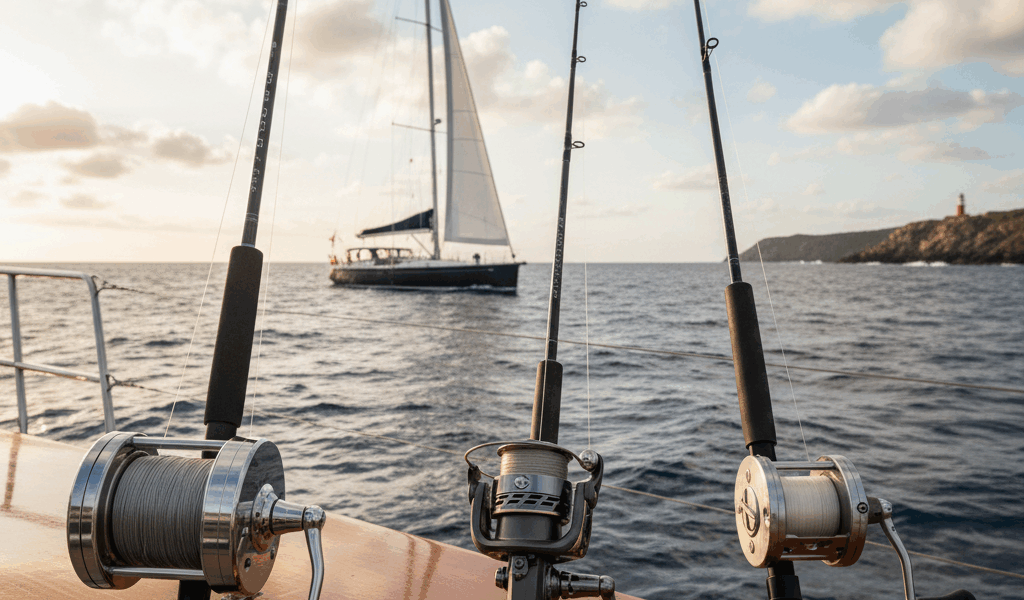
The best fishing reel depends on the job. The Shimano Stradic FM is the strongest all-around spinning choice for anglers who want a durable, refined reel. The Daiwa Regal LT is the value pick for freshwater spinning. The Penn Battle IV is better suited to anglers who regularly fish inshore saltwater. For baitcasting, choose the Abu Garcia Revo X for straightforward value or the Shimano Curado DC when electronically managed spool braking is worth the extra cost. The Penn Squall II Level Wind is the practical conventional option for trolling and bottom fishing, while the Zebco Omega Pro remains an easy-to-use spincast choice.
Do not buy by model name alone. Every reel family includes sizes, gear ratios, line capacities, and left- or right-hand configurations. Match the exact variant to the rod, line, lure, target species, and water before ordering.
Best fishing reels at a glance
| Best for | Reel | Type | Main tradeoff |
|---|---|---|---|
| All-around spinning | Shimano Stradic FM | Spinning | Costs more than an entry-level reel |
| Budget freshwater spinning | Daiwa Regal LT | Spinning | Choose a saltwater-oriented reel for frequent marine exposure |
| Inshore saltwater value | Penn Battle IV | Spinning | Full-metal construction adds weight |
| Value baitcasting | Abu Garcia Revo X | Low-profile baitcaster | Requires spool-brake setup and casting practice |
| Managed baitcast braking | Shimano Curado DC | Low-profile baitcaster | Digital braking raises price and does not eliminate backlash |
| Easy spincast operation | Zebco Omega Pro | Spincast | Less line capacity and control than spinning or baitcasting |
| Trolling and bottom fishing | Penn Squall II Level Wind | Conventional | Not intended as a general casting reel |
1. Shimano Stradic FM: best all-around spinning reel
The Shimano Stradic FM is the most versatile premium spinning recommendation in this list. Shimano offers it in several sizes and retrieve speeds, with technologies aimed at gear durability, rigidity, oscillation, and drag performance. That makes it suitable for applications ranging from freshwater finesse to appropriately sized inshore setups.
Its advantage is refinement rather than a single dramatic specification. A rigid body and well-supported gear train matter when a reel is fished frequently under load. The downside is cost: occasional anglers may get everything they need from a less expensive current model.
Choose it if: you want one well-built spinning platform and can select the correct size. Skip it if: the reel will see rare light-duty use or your budget needs to cover an entire rod-and-reel combination.
2. Daiwa Regal LT: best value freshwater spinning reel
The current Daiwa Regal LT is designed around a light body and rotor with an emphasis on balance and easy startup. It is a sensible choice for bass, walleye, trout, panfish, and other freshwater uses when low weight and price matter more than heavy saltwater protection.
The model still has to match the rod. A compact reel belongs on an ultralight or light rod; a larger size carries heavier line and balances a longer medium-power setup. Compare line capacity and retrieve per handle turn, not just the printed size number, because numbering is not standardized across manufacturers.
Choose it if: you want affordable freshwater spinning performance. Skip it if: repeated surf, kayak, or boat spray makes sealing and corrosion resistance a higher priority.
3. Penn Battle IV: best value for inshore saltwater
The Penn Battle IV combines a full-metal body and sideplate, CNC-cut gearing, carbon-fiber drag washers, and Penn’s Hydro Armor protection around critical areas. The series spans sizes from 1000 through 10000, so “Battle IV” alone does not identify an appropriate reel.
A smaller inshore setup for jigs and plugs has different capacity and balance requirements from surf casting or offshore work. The metal construction resists flex under load but weighs more than a graphite or carbon-composite alternative. Hydro Armor improves water resistance; it does not make the reel waterproof or suitable for submersion.
Choose it if: saltwater durability and a rigid body matter more than minimum weight. Skip it if: you need an ultralight freshwater setup or expect a reel to tolerate dunking without service.
4. Abu Garcia Revo X: best value baitcasting reel
The fifth-generation Abu Garcia Revo X offers multiple gear ratios and left- or right-handle versions. Its magnetic casting brake controls spool speed, while the carbon drag and low-profile body suit common bass and freshwater lure applications.
With baitcasters, “right hand” describes the handle side, not the hand used to cast. Many anglers cast with one hand and retrieve with the other to avoid switching hands. Choose that configuration deliberately. A middle gear ratio is the most flexible; slow ratios provide more leverage, while fast ratios recover slack quickly.
Choose it if: you want a capable low-profile baitcaster without paying for electronic braking. Skip it if: you prefer the simpler casting learning curve of a spinning reel.
5. Shimano Curado DC: best for managed baitcast braking
The Shimano Curado DC uses Shimano’s I-DC4 digital control system to monitor and adjust spool braking during the cast. The system can make changing lure and wind conditions easier to manage, but it cannot correct poor spool tension, an unsuitable lure weight, or an abrupt casting stroke.
It is a better fit for someone committed to baitcasting than for a beginner who only wants to avoid tangles. A quality spinning setup is simpler and often less expensive. Curado DC sizes and regional variants differ, so verify capacity, ratio, retrieve side, and official local specifications.
Choose it if: you value controllable baitcast performance across varied conditions. Skip it if: electronic braking is solving a problem that a spinning reel or basic casting practice would solve more cheaply.
6. Zebco Omega Pro: best easy-to-use spincast reel
The Zebco Omega Pro keeps the push-button operation that makes spincast gear approachable, while sitting above basic youth combos in construction and smoothness. The enclosed spool helps reduce the line-management problems that frustrate new or occasional anglers.
Spincast is not automatically a children’s category. It is useful for anyone prioritizing straightforward operation. The compromises are lower line capacity, less control over line leaving the spool, and more internal friction than a comparable open-face spinning reel.
Choose it if: easy casting matters more than maximum range or sensitivity. Skip it if: you expect to progress quickly into heavier lures, long casts, or larger species.
7. Penn Squall II Level Wind: best conventional value
The Penn Squall II Level Wind is intended for trolling and bottom-fishing jobs where line capacity, controlled deployment, and steady cranking matter. The level-wind mechanism distributes line across the spool during retrieve, reducing the need to guide it manually.
Size must follow the line, target, depth, and technique. A level-wind conventional reel is not the default answer for casting lures; the mechanism and spool design serve different priorities. Offshore anglers also need to consider harness lugs, rod compatibility, drag style, and service access.
Choose it if: you need an accessible conventional reel for trolling or bottom fishing. Skip it if: your primary technique is repeated lure casting.
How to choose the right fishing reel
Start with reel type
- Spinning: easiest versatile choice for finesse, live bait, light-to-medium lures, and many inshore applications.
- Baitcasting: strong lure control and efficient repeated casting once properly adjusted.
- Spincast: simplest push-button operation, with lower capacity and performance ceiling.
- Conventional: designed around trolling, bottom fishing, and heavier line rather than general casting.
- Fly: a separate system in which rod, fly line, backing, arbor, and drag must be matched together.
Match line capacity—not the size label
Manufacturer size numbers are not universal. Use the spool’s published mono and braid capacities to determine whether the reel carries enough of the intended line. Capacity printed for one diameter cannot be translated perfectly by pound-test alone because line diameters differ by product.
Compare inches per turn as well as gear ratio
Gear ratio counts spool or rotor rotations per handle turn, but two reels with the same ratio can retrieve different amounts of line because their spool diameters differ. Inches per turn is the more direct comparison for lure speed and slack recovery.
Use drag intelligently
Maximum drag is not a ranking score. Smooth startup and repeatable adjustment are usually more important than a large headline number. Set working drag with a scale and the complete rod-and-line system; a common starting range is roughly 20–30% of the weakest line or leader rating, then adjust for knots, species, cover, and tackle. Avoid testing heavy drag by pointing the rod straight at a person or fragile object.
Balance the rod
A large reel may provide capacity but make a light rod tip-heavy or cumbersome. Mount the reel on the intended rod when possible. Confirm reel-seat fit, total weight, handle clearance, and whether the rod’s line and lure ratings match the plan.
Saltwater care
No reel is maintenance-free. After saltwater use, keep the drag tightened enough to limit water intrusion, use a gentle freshwater rinse rather than a high-pressure spray, wipe the reel dry, and back off the drag for storage. Follow the manufacturer’s lubrication schedule. Do not flood the reel with oil: excess lubricant can migrate into drag surfaces and collect contamination.
A reel that is submerged, feels rough, develops binding, or shows milky lubricant needs prompt inspection. External corrosion resistance does not protect every bearing, gear, clutch, or drag component.
Frequently asked questions
What is the best fishing reel for a beginner?
A medium-size spinning reel is the most versatile beginner choice because it casts a broad range of tackle and teaches direct line control. Choose a Zebco Omega Pro when push-button simplicity matters more than long-term versatility.
What is the best fishing reel for the money?
For freshwater spinning, the Daiwa Regal LT is the value pick in this comparison. For inshore saltwater, the Penn Battle IV’s metal body and protected critical areas justify its additional weight. For value baitcasting, consider the Abu Garcia Revo X.
Is a spinning reel better than a baitcaster?
Spinning is easier with light lures and has a gentler learning curve. Baitcasting provides direct spool control and efficient repeated casting, especially with medium and heavier lures. Neither type is universally superior.
What reel size should I buy?
Choose from line capacity, rod power, lure weight, target species, and technique—not from a generic size chart. A manufacturer’s 3000 may not match another brand’s 3000.
Complete the setup with our guide to choosing fishing line for different conditions. Boat anglers can also compare trolling motors by boat size, while our polarized fishing-sunglasses guide covers lens and glare considerations.




Stay in the loop
Get the latest passage maker mag updates delivered to your inbox.