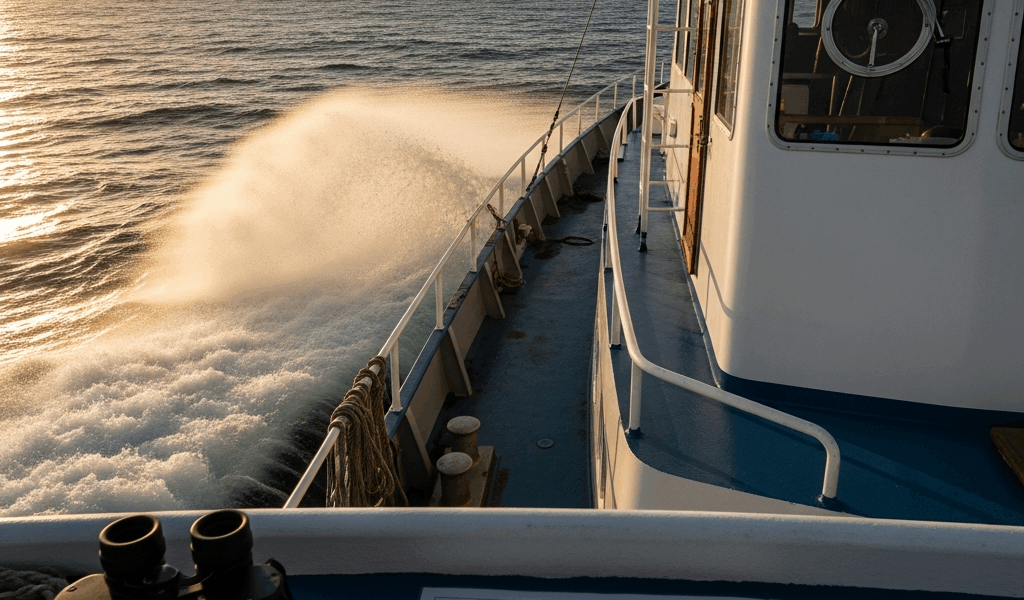
Selene 53 Long Range Trawler Full Owner Review
Buying a bluewater trawler has turned into a moving target with all the glossy brochures and forum opinions flying around. As someone who has owned a Selene 53 for six years, completed two full Florida loops, crossed to the Bahamas, and spent an entire winter anchored in the Northern Rivers system, I dug into the practical details of this boat — the stuff the marketing materials quietly skip over. Today, I will share it all with you.
If you’re searching for a Selene 53 long range trawler full owner review, you’re probably not window shopping. You’ve been on the water. You know what displacement feels like underfoot. You understand fuel burn at six knots in a way that your non-boating friends never will. And you want an honest answer on whether this particular 53-footer justifies the mid-six-figure purchase price — plus the insurance, the yard bills, and the mental overhead that follows a boat this size everywhere you go.
Who Buys the Selene 53 and Why
The Selene 53 buyer demographic falls into three recognizable groups. First: the Great Loop veteran who already conquered the Loop in a 42-footer and now wants more range, more cabin space, and frankly, the offshore capability they never quite used the first time. Second: couples in their 50s and 60s who are serious about leaving for two or three years — not two or three weeks. Third: the experienced trawler hand stepping up from a Nordic Tugs 34 or 37, someone already fluent in the language of fuel efficiency and honest, modest speed.
But what is the Selene 53, exactly? In essence, it’s a semi-displacement long-range cruiser built for extended liveaboard passages. But it’s much more than that — it’s a platform for a specific kind of life, and understanding its specs tells you whether that life fits yours.
The numbers: 52 feet 6 inches LOA, 15-foot 3-inch beam, 3-foot 6-inch draft at rest. That draft matters enormously for shallow ICW sections. Displacement runs around 96,000 pounds. She’s not fast. She was never meant to be. What she offers instead is a genuine ability to carry 1,800 gallons of fuel, two weeks of fresh provisions, and two people who haven’t started hating each other — all at the same time. That’s what makes the Selene 53 endearing to us liveaboard cruisers.
So, without further ado, let’s dive in.
Hull Performance and Fuel Burn at Sea
Frustrated by inconsistent range estimates in the owners’ forums, I spent my first two seasons running fuel logs on every passage — tracking RPM, sea state, and burn rate on a clipboard mounted next to the helm. What I found was this: 9 knots at 1,000 RPM on the Cummins 380s is the sweet spot. Eight to nine gallons per hour per engine. Sixteen to eighteen GPH total. At that burn, a full 1,800-gallon tank delivers roughly 1,100 nautical miles in sea state 3 or below. Real-world. Not brochure math.
Bump to 10 knots and you’re looking at 11 GPH per engine — 22 GPH total. The range doesn’t scale neatly because fuel burn at semi-displacement hull speeds is exponential with velocity, not linear. I cruise between 8.5 and 9.5 knots now and don’t apologize for it. Patience is a fuel-saving strategy.
Motion in beam seas is where the Selene 53 earns its audience. The full bilges and that moderate beam-to-length ratio kill the sharp snap roll you feel in narrower hulls. In a three-foot beam sea, she rolls with predictable rhythm — not comfortable enough to ignore, but tolerable enough that my wife stays in the saloon instead of retreating forward in frustration. That’s the real metric.
The trim tab system works. Single-lever control from the wheelhouse, and you feel the correction within 15 seconds of input. The optional stabilizer fins — I added them in year two, $14,000 installed — earn their keep on beam-sea passages. I skip them in following seas because the drag penalty isn’t worth it. But in a cross-swell approach? They flatten roll amplitude by roughly 30 percent. Sounds modest on paper. After 36 hours underway, it’s the difference between functional and wrecked.
One quirk worth knowing: prop walk at idle is pronounced. Every single-screw trawler does this, but the Selene’s prop diameter and blade area send the stern off to starboard more noticeably than twin-screw alternatives. I’ve made peace with it. This boat doesn’t belong squeezed into tight urban anchorages where precision backing is required — and if that’s your plan, reconsider the hull.
Engines, Systems, and Mechanical Access
The piece that matters most here.
Most Selene 53s come with a pair of Cummins 380 diesels — 380 horsepower each. Some older models carry 6BTA5.9 variants. The engine room is adequate, and I mean that word precisely. You can fit inside. You can reach oil filters and flush raw-water strainers without a yoga background. It’s not spacious enough to stretch out, and the Northern Lights 30-kW generator sits tight against the port engine. But it beats the coffin-box access I’ve seen on smaller coastal trawlers, and that’s not nothing.
Fuel capacity is 1,800 gallons across two baffled tanks with individual shut-offs and crossover valves. The baffles are built properly — I’ve never experienced fuel surge that affected delivery. The polishing loop I installed in year three for around $2,200 in parts and labor has kept both tanks clean. I run them parallel 90 percent of the time and transfer manually when I need weight balance on a long passage.
Raw-water cooling demands respect. The through-hulls are generously sized and the strainers are accessible — but you need to understand your full cooling loop before you head offshore. I’m apparently the kind of person who learns by breaking things, and the Cummins temperature alarm 40 miles out taught me more about sea-grass strainer blockage than any manual ever did. Don’t do what I did. I flush the system every two weeks now when I’m running coastal legs.
The 30-kW Northern Lights generator runs about 1.5 gallons per hour at half load — adequate for ship’s systems, air conditioning, and water heater running simultaneously. I run the genset overnight, during cooking, and when cloud cover kills solar production. That discipline stretches the onboard stores considerably.
Parts availability: Cummins engines are everywhere. Dealer support exists in most ports where a trawler would anchor. Proprietary Selene systems — the hydraulic steering assembly, the custom watermaker mounting hardware, the fuel polishing integration — those parts move slower. I keep a standing inventory aboard: two raw-water pump impellers, one spare alternator belt, a complete fuel filter cartridge set, and a Jabsco impeller kit that fits the generator cooling pump. Learned that inventory the expensive way.
Interior Layout and Liveaboard Comfort
The saloon runs full beam — centerline table, settees port and starboard, 6 feet 4 inches of headroom. On gray-sky days in the Chesapeake, those curved saloon windows and the opening windshield make a genuine psychological difference. Small thing. Not a small thing after three cloudy weeks at anchor.
Galley sits to starboard, forward of the saloon. Three-burner electric stove, convection microwave, 15-cubic-foot refrigerator, two deep lockers below the counter. Not palatial. Two people move through it in careful sequence, not simultaneously. On passages, we prep meals during calm windows and default to one-pot cooking when the sea builds. The fiddles on the countertop are low — a design oversight — and I’ve added wooden fiddle rails on the stove surround and the main prep area. Flying pans aren’t theoretical at sea. They’re a Tuesday.
Master stateroom spans the full forward beam. Queen berth, hanging locker, drawer storage under the mattress. During anchorage days, the forward portlight and overhead hatch make it genuinely livable. On passage, we seal it against salt spray and it stays dark — which, after 20 hours underway, is exactly what you want.
Guest stateroom aft has twin berths, usable headroom, and a private head compartment. We’ve had crew stay aboard for two-week stretches without friction — and that’s the real test of a layout.
Two full heads with separate stall showers. Hot water is unlimited on the genset, managed carefully when we’re on solar and the 800 amp-hour battery bank. Storage is the honest weak point of the layout. Extended passages require discipline: 14 days of fresh provisions, vacuum-sealed dry goods in the galley lockers, canned goods on every available engine room shelf. Liveaboards learn to accept fewer choices. That’s the deal.
What Owners Praise and What They Would Change
The Selene 53 owner community — active on the Selene Owners Group forum, if you can find it — consistently praises structural build quality. Cored hull construction, solid glass in high-load areas, proper scantlings throughout. Osmotic blistering isn’t endemic on these hulls. Deck hardware is substantial. The boat doesn’t feel like it’s arguing with the sea.
What gets criticism: finish work. Paint detailing, locker hinges, and cabinetry tolerances reflect the reality that Selene builds in Taiwan with cost discipline. Nothing fails catastrophically — but a cabinet door won’t hang perfectly after five years of engine vibration without a Tuesday afternoon adjustment. Portlight caulking needs renewal attention every two to three seasons. These aren’t defects. They’re maintenance expectations that first-time owners sometimes don’t anticipate. Now you’re anticipating them.
Yard support through North American dealers is real but inconsistent. A major haul-out — through-hull replacement, rudder bearing service — runs $8,000 to $12,000 depending on where you’re floating. Factory support responds to structural warranty claims. But white-glove service isn’t the relationship here. This is a boat for self-reliant owners, full stop.
Parts in remote anchorages? A failed alternator in Beaufort, North Carolina means a Cummins dealer call and same-week resolution. That same alternator in a small Bahamian marina means a U.S. order, a freight forwarder, and a week of watching other boats come and go. This shapes passage planning now. I don’t leave U.S. waters without spares for anything I can’t improvise around.
The Selene 53 is right for the owner who values genuine range and structural reliability over speed or elegance. She’s right for couples planning two years away from a home dock. She’s right for Great Loop veterans who never want to face a shallow-water draft penalty again. She is the wrong choice for buyers who prioritize finish work over function, for anyone chasing speed on a budget, or for people who haven’t yet spent a continuous week anchored — because that week tells you things about yourself and about liveaboard life that no review can substitute for.
Six years in, I wouldn’t trade her. But I also won’t pretend she’s effortless. She rewards preparation and a genuine willingness to understand her systems deeply. That was 1996 — wait, no. That’s just what she is. And for the right owner, it’s enough.



Stay in the loop
Get the latest passage maker mag updates delivered to your inbox.