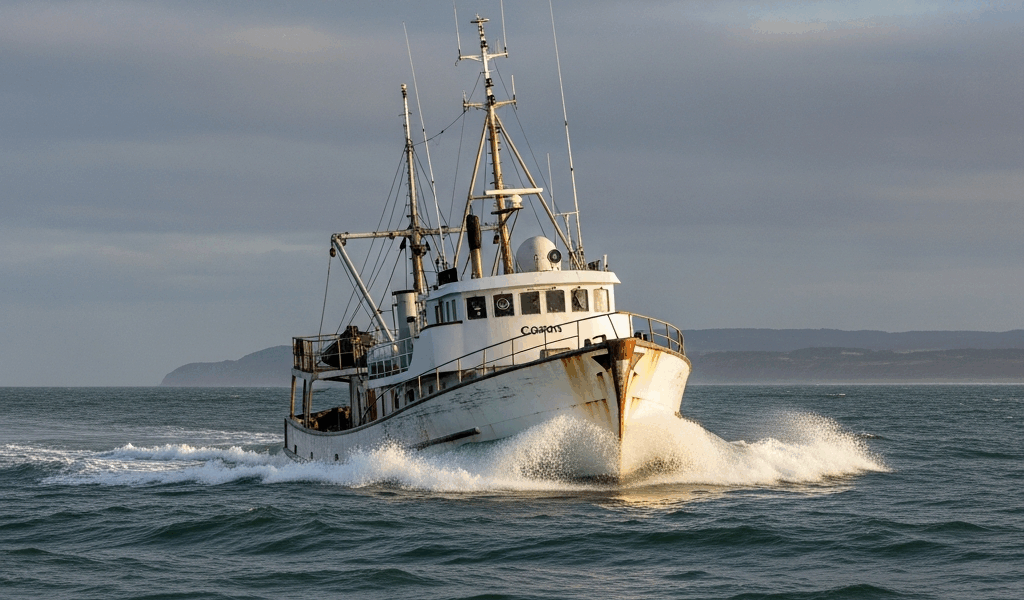
Who the Selene 47 Is Built For
Buying a long-range trawler has become harder to navigate with all the marketing noise flying around. As someone who’s owned a Selene 47 for four years now, I picked up the practical knowledge of who actually belongs on one of these boats — and who definitely doesn’t. Today, I will share it all with you.
But what is the Selene 47, really? In essence, it’s a full-displacement offshore trawler built for extended passagemaking. But it’s much more than that. We’re talking 65 tons of displacement, just under 47 feet on deck, and a 14-foot beam. Those aren’t numbers that make weekend boaters reach for their checkbooks. They’re numbers that make experienced coastal cruisers — people who’ve already put serious miles on a Mainship or a Trawler 38 — start doing mental calculations about Atlantic crossings.
That’s what makes the Selene 47 endearing to us long-range cruising types. It sits in a genuinely useful gap. Big enough for real offshore work. Small enough that two people can actually handle it without hiring crew or financing a second mortgage. I’ve also watched experienced passagemakers step down into a 47 after deciding their 60-footer was ridiculous for a couple and a dog. That’s a real thing that happens.
The hull form, fuel capacity, and systems all point the same direction: extended passages, slow speeds, genuine seakeeping. Not a floating condo with twin Volvo Pentas and a party deck. If your priority is covering ground fast or hosting twelve people in the Exumas, buy something else. Seriously.
Owner demographics, based on forum conversations and four years of talking to other Selene people: usually retired or semi-retired, typically 55 to 70 years old, often a couple. Engineering backgrounds show up constantly. I’d put at least 80% of owners I’ve met in the “already logged serious offshore miles before this boat” category. The design just assumes you know how to hand-steer, manage fuel reserves, and work around weather windows instead of waiting for a perfect forecast. It doesn’t coddle you.
Fuel Burn and True Bluewater Range
This is probably what you Googled. Worth putting near the top.
The Selene 47 burns fuel. Let’s just get that out immediately. At true displacement speed — 7 to 8 knots, which is where this hull belongs — I see 1.8 to 2.2 gallons per hour on a calm day with favorable current. My boat is four years older than delivery day now. The bottom picks up growth between haul-outs despite regular maintenance, and I’m turning the original 6-cylinder Cummins with roughly 2,800 hours on the clock. Numbers from a fresh hull would look slightly better.
Fuel capacity is 1,500 gallons. Selene’s claimed range is 2,500 nautical miles. That math requires perfect conditions and apparently no reserve fuel whatsoever. Real world? I plan for 2,000 nautical miles at displacement cruise. I keep 200 gallons as an untouchable reserve — at least if I want to sleep at night — and I’ve built the habit of factoring in current and sea state before calculating whether a passage pencils out.
One specific passage worth mentioning: Key West to the Dry Tortugas and back, roughly 240 nautical miles round-trip. Moderate seas, 1-knot adverse current most of the way out. I averaged 6.5 knots and burned closer to 18 gallons per hour in beam seas with a short chop working against me. That’s meaningfully higher than flat-water displacement cruise numbers. Current is the variable most first-time passage planners underestimate. An Atlantic crossing with the Gulf Stream helping you runs 15 to 20% more efficiently than bucking it. The Caribbean trade wind route southbound in summer gives you 0.5 to 1.5 knots of favorable current — if you’re patient about timing your departure window.
I know owners running newer Lugger engines reporting 1.6 to 1.9 gallons per hour at 7.5 knots. I’ve also seen older examples burning 2.4 to 2.6. The spread usually comes down to prop pitch, engine condition, and whether the previous owner had a habit of pushing toward 9 or 10 knots where fuel burn climbs fast and the efficiency math falls apart.
Here’s the thing nobody seems to mention upfront: displacement cruising demands a different relationship with time. At 7.5 knots, a 300-nautical-mile day takes 40 hours. Most buyers don’t sit with that number long enough before purchase. Once you genuinely accept that this boat will spend five to seven days crossing the Gulf of Mexico, the fuel consumption starts feeling entirely reasonable. You’re not outrunning anything. You’re just moving steadily toward wherever you’re going, without drama.
Seakeeping and Offshore Motion Comfort
Waking up at 2 a.m. in a beam sea and feeling the boat move — that’s the real test. Not the marina. Not the calm-weather delivery trip. The Selene 47 runs a moderate full-displacement form with a deep forefoot and a fairly high length-to-beam ratio. What that means in practice: she rolls less violently than beamy coastal trawlers and doesn’t hobby-horse in head seas the way narrower hulls sometimes do.
In a 4 to 5 foot beam sea — real offshore conditions, not brochure conditions — the motion is a slow, predictable roll. Not violent. You notice it. You don’t brace yourself constantly or feel seasickness building. In head seas of similar height, the boat pitches with real authority but keeps the bow up. The freeboard is high enough that solid water on deck is unusual unless you’re genuinely in heavy weather and making a poor routing decision.
I’m apparently someone who runs no active stabilization whatsoever, and the Navik passive autopilot works for me while fancy gyro systems never felt worth the fuel penalty. Learn from what tripped me up of agonizing over this for two years before simply going offshore and finding out how you handle the motion. I know two owners running Seakeeper gyros who love the comfort increase — they accept 10 to 15% higher fuel burn as the price. Three others run passive paravane systems, which reduce rolling without engine penalty but demand storage space and genuine maintenance discipline. I chose neither. I sleep fine 200 miles offshore. Personal call.
The boat is honest. She won’t behave like a megayacht in a seaway. She will feel safe, stable, and reasonably predictable — which is a different and arguably more useful thing. If you want Disney Cruise Line motion comfort, a full-displacement trawler is the wrong category entirely. If you want to feel the ocean while staying confident in the hull underneath you, the Selene 47 delivers exactly that.
Interior Layout and Liveaboard Livability
Standard configuration: pilothouse, full salon with dining table, U-shaped galley, one or two staterooms, head with shower. Headroom in the pilothouse and salon runs 6’2″ — adequate for most adults, genuinely tight if you’re over 6’3″. I’m apparently 6’1″ and manage fine.
What works: pilothouse visibility is outstanding. Wide windows forward and to both sides mean you see weather, traffic, and landforms without craning your neck constantly. The helm seat is comfortable for 12-hour days — I know because I’ve logged plenty of them. The galley works reasonably well underway because the cook stays centered and the equipment is secured in a logical sequence. The salon table folds down, which matters when you’re three days offshore and the formal dining setup is just in the way.
What owners modify constantly: ventilation. The original hatch configuration moves air poorly in tropical anchorages. I added a second through-hull blower with a Plexiglas cowl — roughly $340 installed — and it genuinely transformed liveaboard comfort in the Caribbean. Many owners also pull the original incandescent fixtures and go full LED, which cuts electrical load and reduces heat below decks during summer. Storage is adequate but not generous. You need to think hard about gear placement before leaving the dock for six months. I learned this at the Bahamas Bank in July with too many spare parts and not enough organized space. Learn from what tripped me up.
The forward cabin is a proper stateroom with its own head. The aft cabin, if installed, is tight — comfortable for a guest or occasional crew, not really designed for full-time occupancy. Natural light is good in the pilothouse and salon, modest in the cabins. That’s standard across the trawler category. No grand windows offshore, because you want structural integrity more than you want a view from your bunk.
Two people can genuinely live aboard for months. Fresh water capacity runs 500 to 600 gallons, which supports reasonable showers and galley use without obsessive conservation rituals. Wastewater and holding tank capacity are adequate for passages of several weeks. This is a real liveaboard platform — not “sleeps five” in the brochure sense, but actually livable in the practical sense.
Selene 47 Ownership Costs and What to Watch On Survey
Used Selene 47s in reasonable condition currently trade between $750,000 and $1,200,000 depending on year, engine hours, refit history, and location. Boats built in the late 1980s and early 1990s are now 30-plus years old. Expect a competent survey to surface deferred maintenance. That was predictable before you even scheduled the appointment.
First, you should focus relentlessly on the prop shaft and cutlass bearing — at least if you want to avoid a very expensive surprise six months into ownership. Salt water does real work on that component over time, and replacement gets costly. Ask for recent inspection records. If the shaft hasn’t been pulled in five-plus years and the boat spent significant time in salt water, plan for replacement. Budget $8,000 to $12,000 depending on your hauling location and which yard you use.
Engine maintenance on the typical Cummins 6BT or Lugger is straightforward: oil and filter every 500 hours, coolant flushes per Cummins specification, fuel filter changes annually or every 300 hours. Parts are available globally — that matters when you’re in a Caribbean boatyard at 4 p.m. on a Friday. A complete engine overhaul runs roughly $30,000 to $45,000, but most well-serviced examples won’t need one before 8,000 to 10,000 hours. Check the service log obsessively. If there isn’t one, walk away or price in the uncertainty.
Known issues worth flagging: some older Selene hulls developed osmotic blistering on the bottom. Usually cosmetic, occasionally requiring fairing work. Survey the keel and deadrise area with a moisture meter — not optional. Through-hull fittings are the other vulnerability. Most owners replace originals with ball valves and redundant seacocks as a matter of principle, not because anything has failed.
Haul-out costs run $4,000 to $6,000 depending on location. Plan for bottom paint every two to three years if you’re cruising warm water with high biological activity. Annual maintenance budget — excluding repairs — should sit around $15,000 to $20,000 for a well-kept example. That covers fuel filters, oil changes, coolant, impellers, zincs, and seasonal work.
Selene Yachts has changed hands and gone dormant more than once. Parts availability through the original builder is unreliable at best. That said, these boats run standard diesel engines, hydraulic systems, and widely available marine equipment. Any competent marine surveyor and diesel tech can work on one without a factory manual. That’s the real long-term advantage — no proprietary parts holding you hostage in a foreign marina.
Bottom line: the Selene 47 is built for someone ready to cruise extensively without wanting a boat larger than two people can realistically manage. It’s expensive to own and operate. It will cross oceans, hold resale value reasonably well, and reward the owner who understands what displacement cruising actually demands. This is not a retirement boat for meandering the Intracoastal. This is a ship. Treat it like one.

Stay in the loop
Get the latest passage maker mag updates delivered to your inbox.