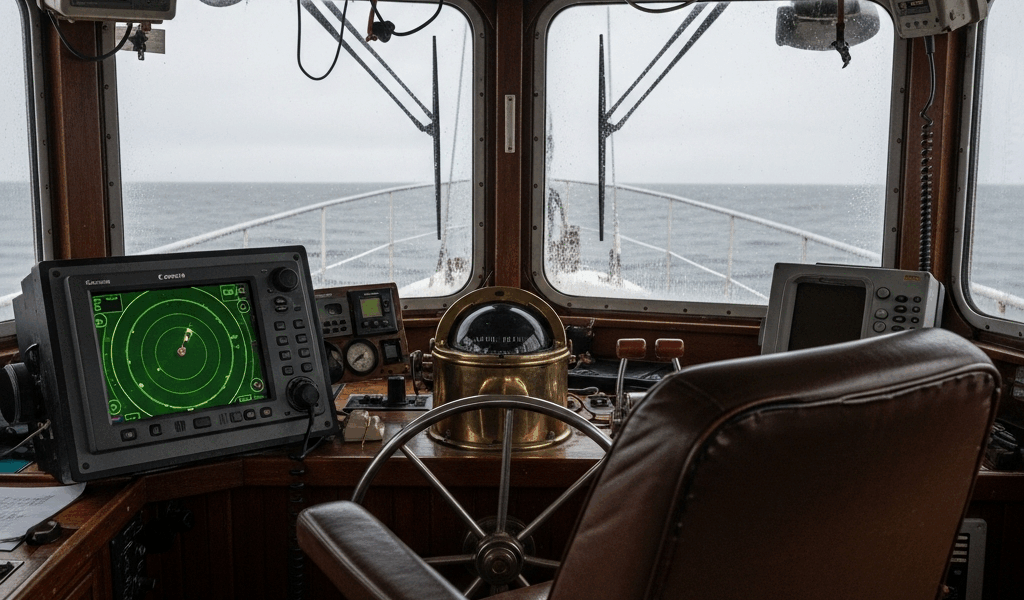
Grand Banks 42 Long Range Trawler: A Full Owner Review
Trawler research has grown more complex with the conflicting owner opinions and manufacturer spin flying around. As someone who spent two years tracking down Grand Banks 42 owners — people who’ve actually crossed to Bermuda in these boats, run the Great Loop twice, or lived aboard for months at a stretch — I sat down and learned what these hulls actually do when conditions stop cooperating. Today, I will share it all with you. The messy version. The one that doesn’t match the brochure.
The GB42 has been around for five decades. Early 1960s and 1970s examples look almost nothing like the updated models that came out of the 1990s and early 2000s. This review focuses on diesel-powered semi-displacement models built from 1978 onward — the era when the boat stopped being a marina ornament and started actually going places.
Who Buys the Grand Banks 42 and Why
But what is the typical GB42 buyer? In essence, it’s a retiring couple in their early sixties with modest nautical experience and a vague sense that the Great Loop won’t wait forever. But it’s much more than that. They’ve spent eighteen months comparing this boat against Nordhavn 46s and Krogen 42s. Then they discover the used GB42 market has three times the available hulls — and that a solid 1988 example with a fresh engine runs forty percent below equivalent Nordhavn pricing. Decision made.
The second type of buyer is rarer but shows up consistently. These are offshore people. They’ve crossed to Bermuda before. They know the difference between “range” and “range at a speed that doesn’t destroy the boat.” They want serious fuel capacity, honest construction, and operating costs that don’t require refinancing a house.
Production years matter enormously here. Early 1970s models came with gasoline engines — skip those entirely, full stop. The 1978–1985 generation ran Ford Lehman diesels paired with single-screw Hurth gearboxes. Under-powered. Bulletproof. The 1985–1995 generation moved to larger engines — usually Caterpillar 3208s or Ford Lehman 135s — and felt genuinely capable. The final run, 1995–2002, brought Cummins 6BT engines and finally, finally, a galley layout that didn’t require spatial reasoning to navigate.
Why does the used market have so many examples floating around? Grand Banks built nearly 2,000 of these boats across all decades and variants. Not all of them survived. But enough did that you’ll find serviceable hulls throughout most U.S. regions for $180,000 to $350,000 — depending on year, engine choice, and whether the previous owner actually invested in systems or just changed the oil and moved on.
Hull Design and Offshore Sea-Keeping
The Grand Banks 42 is semi-displacement — not full-displacement. That distinction is everything. It means the hull planes slightly at higher speeds, then drops back to displacement behavior once fuel burns down and the sea state turns ugly. Full-displacement boats — your Nordhavn, your Krogen — maintain the same hull efficiency whether loaded or light, rough or flat. The GB42 gets grumpy when conditions steepen. That’s just the physics.
Frustrated by a four-foot following sea on the Intracoastal Waterway, a GB42 tracks beautifully and burns predictable fuel. Put that same sea on the beam or quarter — say, returning from Bermuda in March — and the boat develops a corkscrewing motion using every bit of its 13-foot 9-inch beam to remind you it wasn’t optimized for that energy. Several owners I spoke with used the word “wallowy.” Dave from Newport put it plainly: “I knew what I’d bought. But the first time we hit a genuine four-foot confused sea, I understood why the Nordhavn costs more.” That was somewhere southeast of Cape Hatteras. He didn’t elaborate further. He didn’t need to.
Draft sits at 4 feet 3 inches loaded on most examples. That shallower keel is exactly why the boat works for Great Loop passages through shallow rivers — and exactly why it trades away motion damping. Deep-keeled boats with longer waterlines cut through confused seas. The GB42 rides over them instead. Different philosophy entirely.
Stabilizer options vary by build year. Older models came with passive paravanes — wooden or metal vanes towed from outriggers that create lift in a roll. Owners report these work adequately at 6–7 knots. Active fin systems are a different story. One owner in Florida installed a Naiad system in his 1988 model for $38,000 and called it the best money he’d spent on the boat. The motion improvement is real. But you’re adding weight low, pulling electrical power continuously, and stuffing a complex system into an engine room that already feels like a submarine corridor.
The piece that matters most here — the flybridge gets soaked. Not occasionally. Constantly. Low guardrails, a wide beam that generates spray when pushing into chop, and canvas enclosure that doesn’t stop green water from washing the deck. Margaret, a single-hander out of Annapolis, started putting plastic sheeting over her bridge furniture every March because she got tired of replacing cushions at $400 a set. If you’re picturing yourself at the upper helm on offshore passages, revise that picture. Serious passages happen from the lower pilothouse.
Fuel Burn and Real-World Range
Here’s where the numbers matter most. At seven knots — true displacement speed for this hull — a Ford Lehman 135 or Caterpillar 3208 burns roughly 2.8 to 3.2 gallons per hour. Hull condition, loading, and sea state all push that number. At 7.5 knots, figure 3.8 to 4.2 GPH. Hit eight knots and you’re looking at 5.5 to 6.5 GPH as the hull starts lifting toward the plane.
Standard fuel capacity runs 1,200 gallons on most GB42s — one main tank aft, sometimes a smaller day tank forward. Optional extended-range configs added 300 to 400 gallons in wing tanks. Most cruisers never ordered those tanks from the factory. They figure it out later, when the range math stops working.
Real math at seven knots: 1,200 gallons minus a 10 percent reserve leaves 1,080 usable gallons. At three GPH, that’s 360 hours — about 2,520 nautical miles. Sounds fine. Now load the boat for actual cruising. Full fuel. Full fresh water (around 150 gallons). Two people. Two weeks of provisions. A dinghy. Spare parts. Add three tons. The boat sits lower, drag increases, and fuel burn climbs to 3.3 or 3.4 GPH. Range drops to around 2,200 miles. Still workable — except you’re burning into your reserve faster and your margin shrinks to something uncomfortable.
One Maine-based owner ran his 1992 GB42 across the Grand Banks in July. He averaged 3.6 GPH at a GPS-confirmed six knots over ground — wind and current combined doing what they do. He burned 432 gallons covering 1,140 nautical miles. That’s not the marketing number. That’s the July number.
Engine choice changes the equation. Cummins 6BT engines in later models burn roughly ten percent less at cruise — but they’re heavier and more involved to maintain. The older Caterpillar 3208s drink more but are essentially unkillable. Ford Lehmans split the difference and have developed a genuine cult following among cruisers who’ve watched them run past 5,000 hours without touching the bottom end. I’m apparently a Ford Lehman person, and that engine works for me while the 3208 never felt as honest. Save yourself the trouble I had of assuming newer equals better here.
Engine Room, Systems, and Maintenance Reality
Engine room access on the GB42 is adequate. Not generous — adequate. 1980s naval architecture prioritized cabin volume over mechanic-friendliness, and the engine room paid for that decision. The engine sits amidships, reachable from the companionway steps, but reaching the raw water pump, transmission dipstick, or exhaust elbow means contorting yourself in ways that leave marks. Tom from Virginia replaced the stuffing box on his 1989 model and crawled out with bruised ribs. A job that should’ve taken ninety minutes took four hours. He’s not unusual.
Raw water systems are the universal pain point on these boats. Most GB42s pull intake through through-hull fittings forward on the hull. Over thirty-plus years, those fittings corrode, clog with zebra mussels in freshwater circuits, or fail without much warning. The raw water pump impeller sits in an awkward location on most models. “You need three hands and a prayer” — I heard that phrase from three separate owners independently. Budget $2,000 to $4,000 for a professional refit of the cooling loop on any boat that hasn’t run freshwater-only for the past decade. That’s not a maybe.
Fuel tank inspection ports are often inadequate on older examples. Many pre-1990 boats have main tanks with no real clean-out access — you’re looking at tank replacement if serious contamination sets in. Several owners who ran long passages found diesel bugs and tank sludge after 500 to 600 hours of use. Polishing the fuel before any bluewater passage is standard practice. Not optional. Standard.
Electrical systems in pre-1990 models need serious attention before offshore use. Early boats ran 12-volt house setups with perhaps 400 amp-hours split between start and house banks. Modern cruising demands more — dedicated alternators, 800-plus amp-hours for refrigeration, water pressure, and electronics. Budget $8,000 to $15,000 for a proper rewire if the boat’s going offshore. Skip it and you’ll be rationing battery power by night three. I’ve heard that story more than once.
Plumbing on 1970s and 1980s models used whatever materials were available at the time, and some of it hasn’t aged gracefully. Rubber hose perishes, through-hulls weep, and the first season of ownership often turns into a leak-hunting expedition. Galley seacocks, head seacocks, raw water lines — owners consistently report replacing all of it within the first eighteen months. That’s not a defect. That’s a thirty-year-old boat.
Liveaboard and Passage-Making Livability
The GB42 sleeps four comfortably in fair conditions. Master stateroom forward, second cabin aft. For extended offshore passages with two people, the boat genuinely works. The master head is accessible, the galley is functional if tight, and the cabin stays reasonably dry unless you’re in a proper storm.
Galley usability underway is honestly limited. The stove typically sits on the companionway bulkhead — which means cooking blocks the main cabin exit. Bob and Susan from Ohio, who ran their 1991 model from Lake Erie to Florida and back, solved this with a small portable camping stove on the aft deck under a canvas cover. Not elegant. But it meant boiling water without creating a fire hazard or a traffic jam in the main cabin. Counterspace is sparse. Refrigeration works but draws power continuously — factor that into your electrical budget before you go offshore.
The head situation is manageable if you accept confined quarters. Most models have a manual pump toilet and a small sink. Water pressure varies with battery charge and tank pressure — something you notice immediately on passage. Showers are wet-room style, which is cramped and damp but functional for two people over two weeks. That’s what these boats were designed for. That’s what they do.
Cockpit size limits dinghy handling and fishing. Modest rail space, no true aft deck. If you’re planning serious fishing or frequent dinghy launches, you’ll be frustrated. If you’re running the Great Loop and tying up to a dock each night, it’s irrelevant.
Storage volume is the sleeper asset nobody talks about enough. Hanging lockers in both cabins, under-sole compartments throughout, and lockers tucked into spaces you wouldn’t expect. Genuine capacity for a month-long cruise — which matters more than it sounds when you’re provisioning offshore.
So, without further ado, let’s call it what it is. The Grand Banks 42 is best suited for Great Loop cruising, extended coastal passages, and retired couples who value fuel economy and proven construction over cutting-edge sea-keeping. That’s what makes the GB42 endearing to us trawler people — it’s honest about what it is. It will get you to Bermuda. It will not hug your schedule or coddle you in weather. Against a Nordhavn 46 or Krogen 42, it’s slower at cruise, slightly less composed in a seaway, and costs one-third the price. For the buyer who’s realistic about their cruising ambitions, willing to spend the first year replacing tired systems, and working within a real-world budget — it’s a legitimate choice with a massive parts supply and an owner community that genuinely shows up when you need help. That’s not nothing. For most buyers in this category, that’s actually everything.


Stay in the loop
Get the latest passage maker mag updates delivered to your inbox.