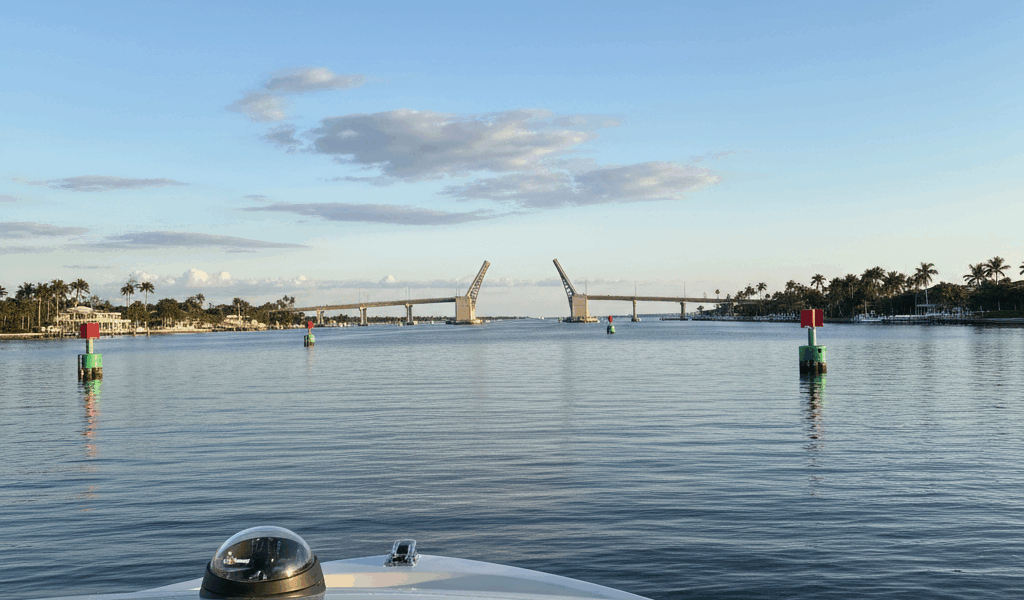
ICW navigation has started getting harder to follow with all the shoaling reports and bridge changes flying around. As someone who has run the ditch multiple times from the Chesapeake to Florida and back, I dug into the practical details of keeping your keel out of the mud. Today, I will share it all with you.
Understanding ICW Markers
Probably should have led on this subject, in fairness. ICW markers follow the standard red-right-returning rule, but “returning” means heading south on the Atlantic ICW and west on the Gulf ICW. Green markers stay to port, red to starboard when following this convention. Mess this up once and you won’t forget it again.
Yellow squares and triangles distinguish ICW markers from local channel markers. When ICW and local markers conflict, follow the yellow. This becomes critical where the ICW crosses busy commercial channels—ignore the yellow and you’ll find yourself somewhere you don’t want to be.
Dealing with Shoaling
That’s what makes current information endearing to us ICW cruisers—yesterday’s depths don’t matter today. The ICW shoals constantly. Channels that showed adequate depth last season may now have sand bars. Active Cruisers forums and Waterway Guide updates provide current reports, but nothing replaces careful depth watching and a slow approach to unknown areas.
Time your transit of notorious shoaling areas for high tide. Georgia’s Altamaha Sound, numerous cuts through North Carolina, and sections of the Texas ICW regularly catch boats. Local knowledge from marinas and other cruisers proves invaluable—buy someone a drink and ask about conditions ahead.
Bridge Protocol
ICW bridges range from 65-foot fixed spans to restricted-schedule openings. Know your mast height and add a margin for tide and waves. Download bridge schedule apps or consult Waterway Guide for opening times—nothing ruins your day like arriving five minutes after an opening and waiting an hour for the next one.
Approach restricted bridges with speed to arrive at opening time, not early. Holding position in current while waiting for an opening tests boat handling skills and patience. Call the bridge tender on VHF 13 if unsure of protocols. They’ve seen every mistake possible and can talk you through it.
Planning Daily Runs
ICW cruising rewards moderate daily distances. Plan for 40-60 miles per day to allow time for bridge delays, shoaling detours, and enjoyable stops. Pushing hard leads to arriving at unfamiliar anchorages in darkness, which is how groundings happen.
The ICW experience improves when you embrace its slower pace. Shore-side towns offer provisions and restaurants worth exploring. Fellow cruisers share intelligence about conditions ahead over sundowners. The protected water lets you cruise comfortably in conditions that would keep you harbor-bound offshore, which is the whole point.


Stay in the loop
Get the latest passage maker mag updates delivered to your inbox.