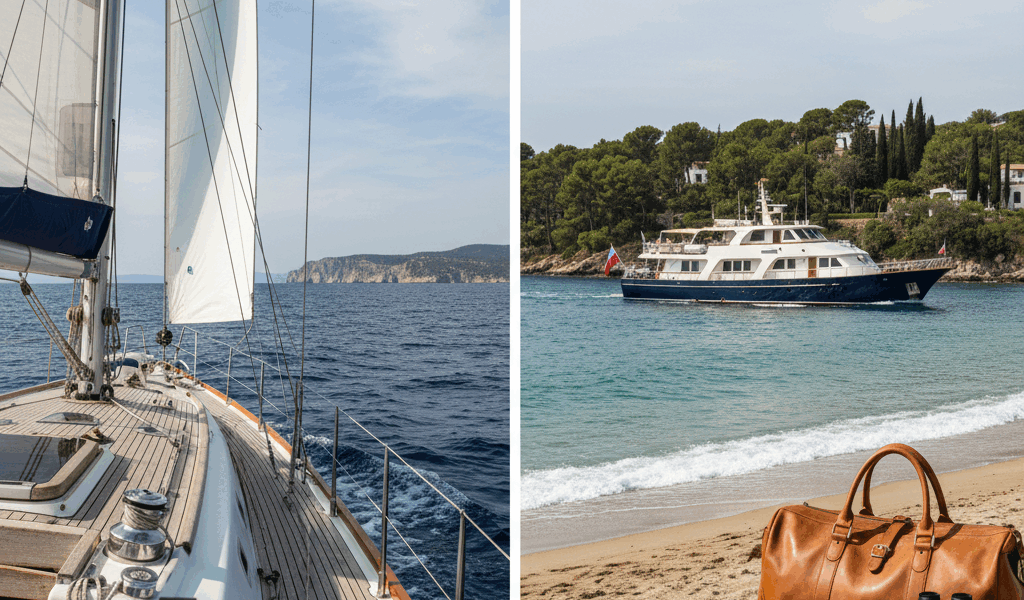
On a Boat vs By Boat: Which is Correct? Complete Grammar Guide
Should you say “I traveled on a boat” or “I traveled by boat“? While both phrases are grammatically correct, they have different meanings and are used in different contexts. This guide explains exactly when to use each phrase, with clear examples and common usage patterns.


Quick Answer
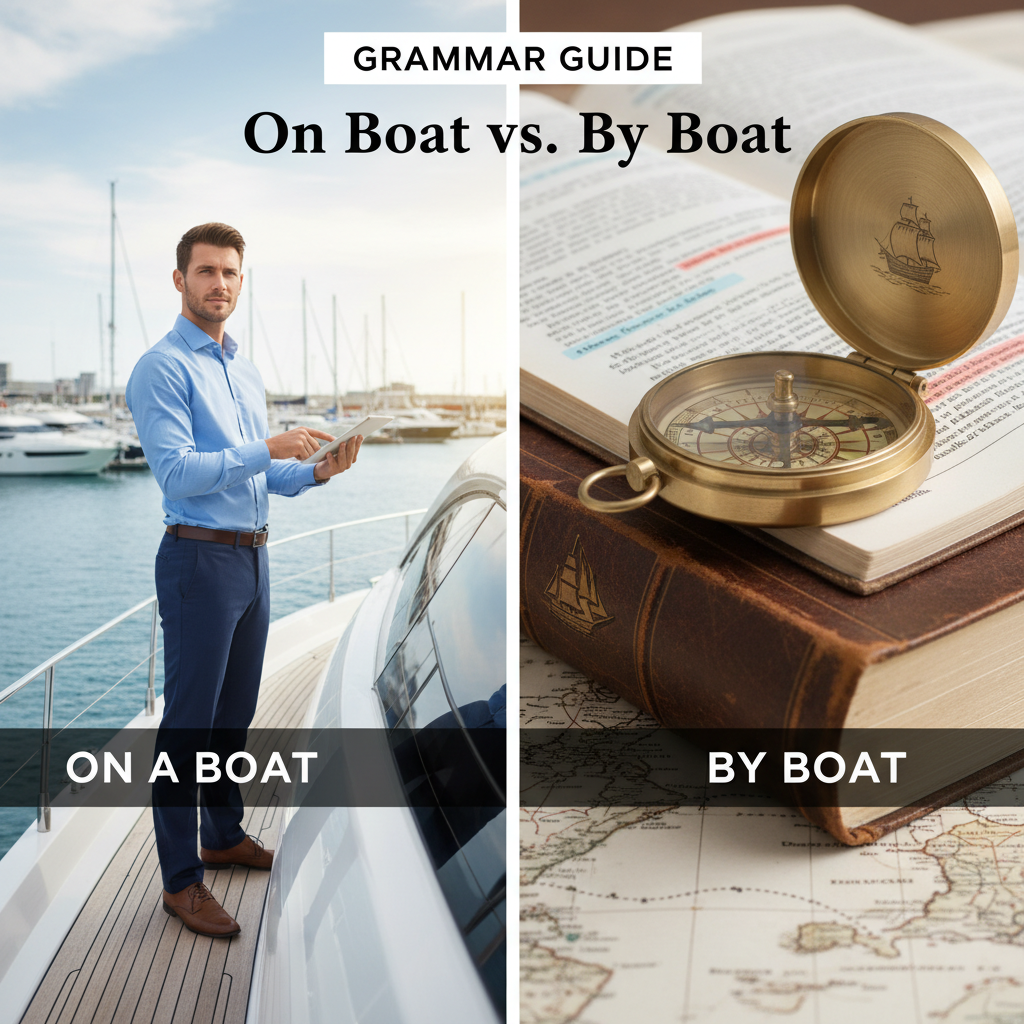
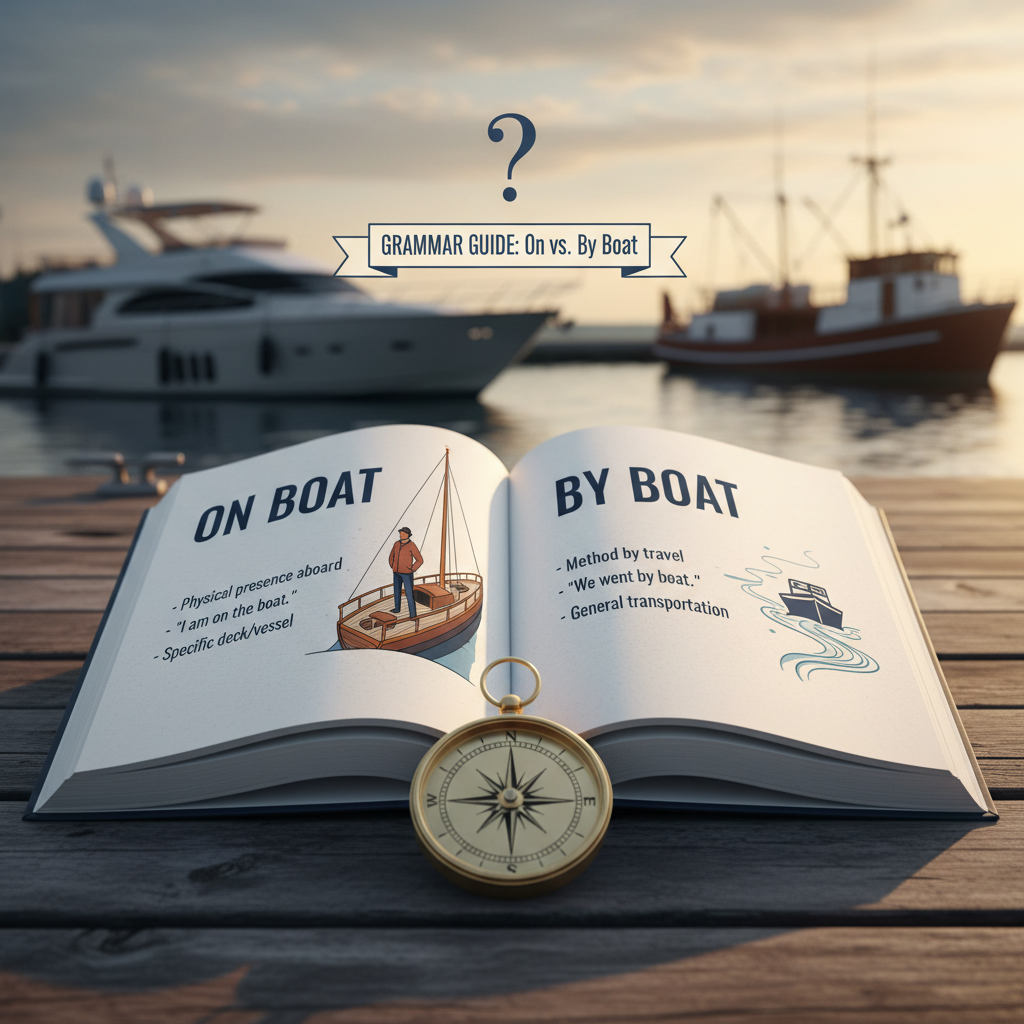
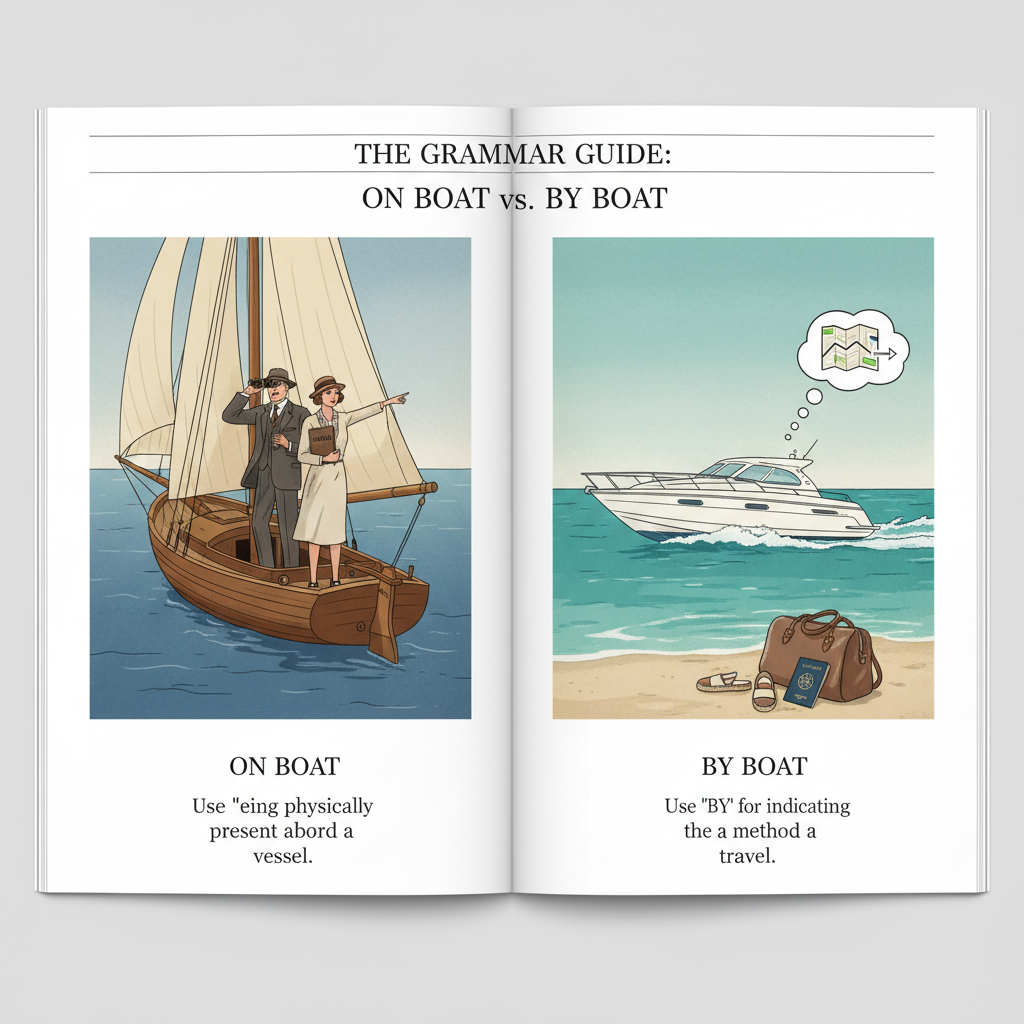
- “On a boat” = You are physically aboard a specific vessel
- “By boat” = Boat is your mode of transportation (like “by car” or “by plane”)
Example difference:
- “I’m on a boat right now” (You’re standing on the deck)
- “I traveled to the island by boat” (Boat was your transportation method)
When to Use “On a Boat”
Meaning and Usage
“On a boat” means you are physically located aboard a specific boat or vessel. The preposition “on” indicates your position on the boat’s surface (deck, cabin, etc.).
Common Uses:
1. Describing your current location:
- “I’m on a boat in the middle of the harbor.”
- “We spent the afternoon on a boat fishing.”
- “The party is on a boat tonight.”
- “I left my jacket on the boat.”
2. Describing activities happening aboard:
- “We had dinner on a boat while watching the sunset.”
- “The wedding ceremony took place on a boat.”
- “I work on a boat” (you’re a crew member or work aboard vessels)
3. Emphasizing the boat itself:
- “We live on a boat” (liveaboard lifestyle)
- “I sleep better on a boat than in a house.”
- “There were 50 people on the boat.”
Why “On” Instead of “In”?
English uses “on” for boats (and other vehicles) because historically, you ride on the deck or surface of the vessel. Even if you’re inside a cabin, we still say “on a boat,” not “in a boat.”
Correct: “I’m on a boat.”
Incorrect: “I’m in a boat.” (sounds like you’re inside a tiny rowboat or dinghy)
Exception: “In a boat” can be used for very small vessels like canoes, kayaks, or rowboats where you’re literally sitting inside the hull.
- “We paddled down the river in a canoe.”
- “I was sitting in a kayak when I saw the whale.”
When to Use “By Boat”
Meaning and Usage
“By boat” describes your method or mode of transportation. It answers the question “How did you travel?” The preposition “by” indicates the means of transport.
Common Uses:
1. Describing how you traveled:
- “We went to the island by boat.”
- “You can reach the village by boat or by helicopter.”
- “I commute to work by boat every day.”
- “The supplies are delivered by boat.”
2. Comparing transportation methods:
- “It’s faster by boat than by car around the bay.”
- “We could go by boat, by plane, or overland.”
- “Traveling by boat is more scenic than flying.”
3. General statements about boat transport:
- “Goods are shipped by boat across the ocean.”
- “The only way to access the cabin is by boat.”
- “I prefer traveling by boat to flying.”
Pattern: “By [Mode of Transport]”
“By boat” follows the same pattern as other transportation methods:
- By car
- By plane / by air
- By train
- By bus
- By bicycle
- By ferry
- By ship
Note: No article (“a” or “the”) is used with this construction.
- Correct: “I traveled by boat.”
- Incorrect: “I traveled by a boat.” ❌
Side-by-Side Comparison
| Scenario | On a Boat | By Boat |
|---|---|---|
| Current location | ✅ “I’m on a boat” | ❌ Not used |
| How you traveled | ❌ Not typically used | ✅ “I came by boat” |
| Activity location | ✅ “We ate lunch on a boat” | ❌ Not used |
| Transportation method | ❌ Not used | ✅ “Accessible by boat only” |
| Living situation | ✅ “We live on a boat” | ❌ Not used |
| Comparing transport | ❌ Not used | ✅ “By boat or by car?” |
Common Mistakes and How to Fix Them
Mistake 1: Using “by a boat”
❌ Wrong: “I traveled to the island by a boat.”
✅ Right: “I traveled to the island by boat.”
Why: When describing transportation mode, don’t use articles with “by.”
Mistake 2: Using “in a boat” for large vessels
❌ Wrong: “I’m in a cruise ship.”
✅ Right: “I’m on a cruise ship.”
Why: Use “on” for boats and ships, “in” only for very small vessels where you sit inside.
Mistake 3: Confusing context
❌ Wrong: “I traveled by a sailboat.”
✅ Right: “I traveled by boat” or “I traveled on a sailboat.”
Why: Use “by boat” (no article) for transportation mode, or “on a sailboat” if emphasizing the specific vessel.
Mistake 4: Using “on boat” without article
❌ Wrong: “I’m on boat right now.”
✅ Right: “I’m on a boat right now” or “I’m on the boat.”
Why: “On” requires an article when describing location.
Other Preposition Combinations with Boats
Aboard a Boat
“Aboard” is a more formal alternative to “on” when you’re physically on the vessel:
- “All passengers are now aboard the boat.”
- “Welcome aboard!”
- “I was aboard when the storm hit.”
In a Boat (Small Vessels)
Use “in” for small, open vessels where you’re sitting inside:
- “We were paddling in a canoe.”
- “Two people can fit in this kayak.”
- “I sat in the rowboat while he fished.”
Off a Boat
Use “off” when getting off or departing:
- “Everyone get off the boat.”
- “We jumped off the boat into the water.”
- “I fell off the boat but was rescued immediately.”
Into a Boat / Onto a Boat
Use when boarding:
- “Step carefully onto the boat.” (larger vessels)
- “Climb into the boat.” (small vessels)
British vs American English
Both British and American English use “on a boat” and “by boat” in the same way. There are no significant differences in usage.
However, there are regional vocabulary differences:
- US: “I’m on a boat.”
- UK: “I’m on a boat.” (same)
Ship terminology differs slightly:
- US: More likely to use “boat” for any vessel
- UK: More likely to distinguish “ship” (large) vs “boat” (small)
Usage in Different Contexts
Sailing and Boating
- “I’m going sailing on a boat this weekend.” (physically aboard)
- “You can reach the marina by boat from downtown.” (transportation)
- “Life on a boat is very different from life ashore.” (lifestyle)
Travel and Tourism
- “The island is accessible by boat only.” (transportation method)
- “We took a tour on a boat around the bay.” (activity location)
- “Arriving by boat gives you the best view of the coast.” (how you arrive)
Work and Employment
- “I work on a boat.” (your workplace is aboard)
- “Commercial fishermen travel by boat to fishing grounds.” (transportation)
- “He’s been on boats his whole career.” (working aboard vessels)
Living Arrangements
- “We live on a boat full-time.” (liveaboard)
- “Getting groceries when you live on a boat requires planning.”
- “I commute to shore by boat from my anchored sailboat.” (transportation)
Examples in Sentences
Correct Uses of “On a Boat”:
- “I proposed to my girlfriend on a boat during sunset.”
- “The captain invited us to have dinner on his boat.”
- “My phone died while I was on the boat, so I couldn’t call.”
- “We spent three hours on a boat watching whales.”
- “The party on the boat was amazing!”
- “I get seasick when I’m on a boat in rough water.”
- “We’re staying on a boat instead of at a hotel.”
- “I left my sunglasses on the boat yesterday.”
Correct Uses of “By Boat”:
- “The only way to reach the island is by boat.”
- “We’re traveling by boat down the Danube River.”
- “I’d rather go by boat than take the bridge.”
- “Supplies arrive by boat once a week.”
- “You can get there by boat in 30 minutes.”
- “They export the fish by boat to the mainland.”
- “It’s a two-hour journey by boat across the lake.”
- “We went by boat because the road was closed.”
Special Cases and Exceptions
Submarine
Submarines use different prepositions:
- Correct: “I serve on a submarine” or “in a submarine“
- Both are acceptable because submarines operate underwater (inside/enclosed)
Ferry
- Transportation mode: “We went by ferry.” (specific type of boat transport)
- Location: “We’re on the ferry right now.”
Ship vs Boat
The preposition rules remain the same whether you say “boat” or “ship”:
- “I’m on a ship” (location)
- “I traveled by ship” (transportation – though less common than “by boat”)
Quick Reference Guide
Use “On a Boat” When:
- ✅ Describing where you are physically located
- ✅ Talking about activities happening aboard
- ✅ Describing the boat as a place (living, working, staying)
- ✅ Emphasizing the specific vessel
Use “By Boat” When:
- ✅ Answering “How did you get there?”
- ✅ Comparing transportation methods
- ✅ Describing the general means of transport
- ✅ Talking about accessibility or shipping methods
Remember:
- “On a boat” = location/position (with article)
- “By boat” = transportation mode (no article)
Practice Exercises
Choose the correct phrase:
- “I’m _____ right now, so I’ll call you back later.”
- Answer: on a boat
- “We traveled to the island _____.”
- Answer: by boat
- “The wedding ceremony will be held _____.”
- Answer: on a boat
- “Is it faster to go _____ or by car?”
- Answer: by boat
- “I left my camera _____ when we docked.”
- Answer: on the boat
- “The cargo is shipped _____ from China.”
- Answer: by boat
Conclusion
The difference between “on a boat” and “by boat” is straightforward once you understand the pattern:
- “On a boat” describes your physical location or position aboard a vessel
- “By boat” describes boat as your mode of transportation
Think of it this way: If someone asks “Where are you?”, you say “I’m on a boat.” If they ask “How did you get there?”, you say “I came by boat.”

Both phrases are grammatically correct – they’re just used in different contexts. Master this distinction, and you’ll sound like a natural English speaker whether you’re talking about marine travel, boating activities, or nautical adventures!



Stay in the loop
Get the latest passage maker mag updates delivered to your inbox.