Hurricane season planning has gotten complicated with all the options and insurance requirements flying around. As someone who has weathered multiple hurricane seasons in the Caribbean, I learned everything there is to know about keeping your boat safe from June through November. Today, I will share it all with you.
Sailing South of the Zone
Probably should have led with this section, honestly. Trinidad, Grenada, and the ABC islands (Aruba, Bonaire, Curacao) sit below the typical hurricane track. Trinidad’s extensive boatyards and Grenada’s protected bays attract hundreds of boats each season. These destinations aren’t hurricane-proof—nothing is—but statistics favor them heavily.
Chaguaramas Bay in Trinidad offers the highest concentration of boatyards and marine services in the region. Grenada’s budget-friendly options and easier immigration draw cruisers who prefer to stay aboard and work on projects. Both locations fill early; reserve space by April or you might find yourself scrambling.
Hurricane Holes
That’s what makes proper hurricane hole selection endearing to us Caribbean cruisers—find the right spot and you sleep a little better when storms threaten. Mangrove-lined creeks and enclosed harbors offer protection within the hurricane zone. The best hurricane holes feature surrounding hills that break wind, narrow entrances that limit wave penetration, and good holding in mud bottom.
Research potential holes before storm threats develop—not when everyone is panicking and racing for the same spots. Anchor placement matters enormously. Experienced cruisers set multiple anchors in carefully planned patterns, adding shore lines to mangroves when possible.
Hauling Out
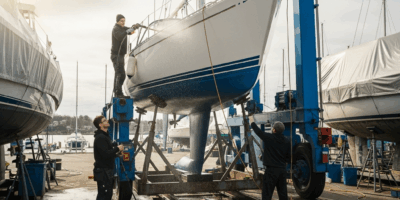
Getting your boat out of the water eliminates storm surge risk—the deadliest factor for boats in hurricanes. I’ve seen floating debris destroy boats that survived the wind. Many Caribbean yards now specialize in hurricane storage, with engineered tie-down systems and strategic positioning.
Book hurricane storage early. Popular facilities fill by spring. Inspect the yard’s preparation protocols, including how they secure boats and what they do about other owners’ poorly prepared vessels nearby. One loose boat can cause a domino effect that damages dozens.
Insurance Considerations
Most marine policies restrict hurricane season coverage in the Caribbean. Named-storm deductibles can reach 5-10% of hull value, which is a lot of money on a serious cruising boat. Understand your policy limitations before committing to a location strategy.
Some insurers require boats be hauled or moved outside the hurricane zone during specific months. Verify requirements well before season begins—finding out in May that you needed to be somewhere else by April creates problems that are expensive to solve.

Stay in the loop
Get the latest passage maker mag updates delivered to your inbox.