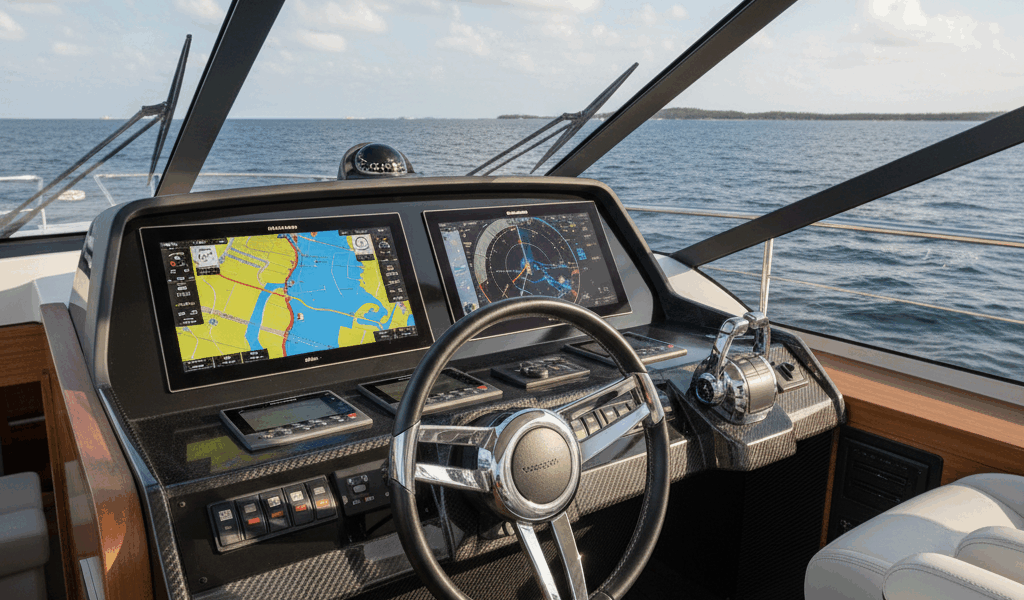
Autopilot Selection
Autopilot selection has gotten complicated with all the brands, drive types, and integration requirements flying around. As someone who has crossed oceans with autopilots doing the heavy lifting on long watches, I learned everything there is to know about picking the right system for your boat and your cruising plans. Today, I will share it all with you.
Let me tell you something about autopilots that you won’t find in the brochures: a good autopilot doesn’t just steer your boat. It fundamentally changes your cruising experience. Single-handing or short-crewing a passage without one is exhausting in a way that’s hard to describe until you’ve done it. With a reliable autopilot, a 48-hour offshore run becomes manageable instead of a death march. I learned that lesson the hard way on an early delivery when the pilot gave out twelve hours in.

What to Actually Look for in an Autopilot
Probably should have led with this section, honestly. Prepare your vessel with an autopilot that’s rated for a boat one size larger than yours — undersized pilots work harder, wear out faster, and perform poorly in heavy weather when you need them most. Develop your understanding of drive types, because hydraulic, mechanical, and electric each have tradeoffs in terms of power draw, responsiveness, and maintenance. Plan conservatively on your power budget, because an autopilot running 24 hours a day on passage draws a lot more current than you might expect. That’s what makes autopilot selection endearing to us passagemakers — the right system lets you focus on navigation, weather, and actually enjoying the voyage instead of grinding away at the helm hour after hour.



Stay in the loop
Get the latest passage maker mag updates delivered to your inbox.