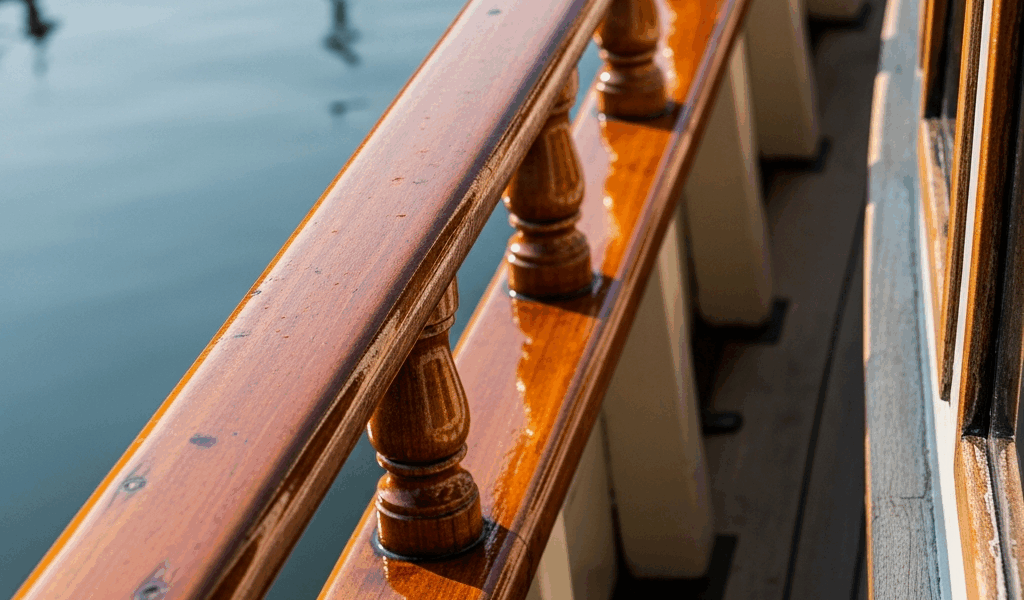
Marine Varnish Has Gotten Complicated — Why Interior Products Keep Failing on Boats
Finding the best boat varnish has evolved with all the conflicting advice flying around. As someone who spent three seasons rebuilding brightwork on a 1987 Cabo Rico with UV-wrecked teak and ash trim, I spent real time learning the ins and outs of why marine-grade varnish plays by entirely different rules. Today, I will share it all with you.
This article includes affiliate links. We may earn a commission at no extra cost to you.
The sun hits your boat differently than it hits your living room floor. The wood moves constantly — humidity swings, temperature drops, salt air working on every surface. Regular polyurethane? Gone in four months. I know because I tried it.
UV Inhibitors and Why They Actually Matter
But what is UV degradation doing to your finish? In essence, it’s ultraviolet rays penetrating clear coatings and breaking down the lignin in wood fiber. But it’s much more than that — you see it as darkening, checking, eventually peeling sheets of varnish lifting off your cabin trunk.
Marine formulations load UV absorbers directly into the finish. Epifanes uses a combination approach — linseed and tung oil together. TotalBoat adds titanium dioxide. Interlux relies on hindered amine light stabilizers. Marine varnish typically runs 8–12% UV absorbers by weight. That’s why a quart costs $35–$55 instead of $12.
Skip the misstep I made. First year out, I brushed Minwax polyurethane onto my cabin trunk. Beautiful finish. Lasted four months before checking started. The UV inhibitors in standard interior poly are minimal — those products live indoors and nobody designed them for open water in August.
Flexibility for Wood Movement
Teak and mahogany shrink and swell. Summer heat expands them. Winter cold contracts them. A rigid coating cracks as the wood underneath shifts — and it will shift, guaranteed. Marine formulations use flexible resins, usually polyurethane or tung oil based, that bend with the wood rather than fighting it.
Push flexibility too far and the finish goes soft. Keep it too rigid and you get the same checking pattern I saw on my cabin trunk within weeks of application. The best marine varnishes hold that balance — moving with seasonal changes while maintaining adhesion to both the wood and the coat above. Harder than it sounds to get right.
Tung Oil Versus Polyurethane Base — And Why This Actually Matters
Worth mentioning before anything else. Base chemistry determines everything about application, maintenance, and longevity before you even open the can.
Tung oil varnishes dry through oxidation. They penetrate wood slightly, hardening as they cure. Multiple thin coats build protection gradually — it’s slower but more forgiving. Polyurethane-based varnishes cure through chemical cross-linking, sitting on top of the wood in a hard plastic film. Both work on boats. The choice depends on your climate and your patience for maintenance.
Tung oil finishes are easier to repair — sand off a damaged spot, recoat, and it blends seamlessly. Polyurethane builds a harder film faster and lasts longer between refresh coats in harsh sun. That matters enormously if your boat lives in Florida versus the Pacific Northwest. I’ve watched boat owners switch products mid-project without understanding which system they’d started with, and mixing incompatible bases creates a peeling disaster that costs a full weekend to fix.
Top Marine Varnishes Compared — What Actually Performs
I tested four products across three seasons. Real conditions. Real boats. No controlled lab environment — just docks, sun, and humidity. This comparison focuses on durability, UV protection, and honest recoat schedules.
Epifanes Clear Gloss — The High-End Standard
Epifanes is Dutch. The formula combines linseed oil and tung oil with phenolic resin and polyurethane — that’s what gives it the reputation. Coverage runs roughly 400–500 square feet per gallon depending on wood grain and surface condition. You need 6–8 coats minimum for adequate UV protection. Recoat time is 16 hours between coats at 70°F and 50% humidity.
Price hovers around $50–$60 per quart. A full brightwork refresh on a 35-footer needs 3–4 quarts total. The finish cures to glass-like hardness. UV protection holds for 18–24 months in direct sunlight — longer if the boat lives under a cover part-time. One catch: synthetic brushes leave texture. You need quality natural bristle, ideally badger hair.
The downside is time. Eight coats with 16-hour waits between them works out to five days minimum, assuming no rain interrupts curing. I used Epifanes on my cabin trunk repaint and got two full years before UV damage became visible.
That’s the real-world timeline — not the optimistic number on the label.
Interlux Schooner — The Workhorse
Interlux Schooner is polyurethane-based. Coverage is similar — 400–500 square feet per gallon. Recoat time is faster: 4–6 hours between coats. Eight coats in a single weekend is genuinely achievable if conditions cooperate. Price runs $35–$45 per quart, making it more accessible than Epifanes without dropping into budget territory.
UV protection lasts about 12–18 months in harsh conditions. The finish is harder and glossier than Epifanes and sands more easily between coats. The trade-off is flexibility — in cold climates with extreme seasonal swings, Schooner can crack sooner than oil-based alternatives. That’s not a knock. It’s just physics.
I applied Schooner to an ash rail on a different boat. Seven coats over two full days. The finish looked professional immediately — that deep gloss you want on brightwork. At 14 months, checking appeared around the rail ends where wood movement is greatest. The hard polyurethane film couldn’t flex enough. Still respectable performance.
Just faster degradation than Epifanes in that specific application.
TotalBoat Gleam — The Value Play
TotalBoat Gleam is polyurethane-based with titanium dioxide UV blockers. Coverage matches competitors at 400–500 square feet per gallon. Recoat time is 6–8 hours. Price is $28–$35 per quart — genuinely affordable for a marine product. UV protection lasts 12–16 months in direct sun.
The gloss is excellent. Application is straightforward. The finish feels slightly softer than Interlux Schooner, which translates to better wood flex accommodation — that’s actually an advantage in climates with real seasonal swings. I’m apparently a mahogany-and-cabin-sole person and Gleam works for me there while Schooner never did as well on flexing substrates.
Consistency can vary between batches more than premium brands. I bought two quarts six months apart and got slightly different viscosity. Not a dealbreaker. Just something to watch for if you’re completing a project across multiple seasons — stir both cans and compare before brushing.
Pettit Captain — The Traditional Choice
Pettit Captain is phenolic resin based, closer to Epifanes in chemistry but with different performance characteristics. Coverage is 500–600 square feet per gallon — it spreads further than the others. Recoat time is 24 hours between coats. Price is $40–$50 per quart.
UV protection holds for 18–20 months in many conditions. The finish builds slowly — eight coats minimum, sometimes more. Application feels thick initially, almost sludgy, and it requires proper thinning with Pettit thinner specifically to achieve smooth results without brush marks. Use a different thinner and you’ll know immediately.
I avoided Pettit initially because that 24-hour recoat window is long — one timing mistake and you’re sanding everything back to start again. I eventually used it on a gunwale repair and came away respecting the product. But the workflow demands patience that TotalBoat or Interlux simply doesn’t require.
Quick Comparison
- Epifanes: 6–8 coats, 16-hour recoat, $50–60/qt, 18–24 month UV protection, best flexibility
- Interlux Schooner: 8 coats, 4–6 hour recoat, $35–45/qt, 12–18 month UV protection, fastest application
- TotalBoat Gleam: 8 coats, 6–8 hour recoat, $28–35/qt, 12–16 month UV protection, best value
- Pettit Captain: 8+ coats, 24-hour recoat, $40–50/qt, 18–20 month UV protection, longest recoat window
Application Tips for Long-Lasting Brightwork — How to Actually Do This Right
Varnish quality matters. Application matters more. I’ve seen premium Epifanes fail in two years from careless technique and watched TotalBoat Gleam last three years because of proper prep. That gap shouldn’t exist — but it does, consistently.
Surface Preparation — Why This Takes Longer Than You Think
Sand the substrate clean. 120-grit minimum, 150-grit preferred for most wood species. Remove all old varnish, dirt, and oxidation. Failing finish comes off completely — spot-sand only the areas that are genuinely solid. This step eats roughly 40% of total project time. Budget for it.
Dust removal matters more than most first-timers expect. Marine varnish is unforgiving with inclusions. Tack cloth before every single coat. Vacuum the work area. Wipe surfaces with a lint-free rag and mineral spirits 30 minutes before application — not right before, because the spirits need time to flash off. Dust settling into wet varnish creates rough spots you’ll spend the next coat sanding out.
Coat Building — Minimum 6, Realistically 8
One coat of varnish provides zero UV protection. That is not an exaggeration. Two coats provide marginal protection. Three coats start to work. Six is the minimum for adequate sun exposure. Eight is better. Ten creates a film so thick that adhesion and flexibility both suffer — more isn’t always more.
Sand between every coat. 180 or 220-grit. You’re not removing the previous coat — you’re roughing the surface so the next coat adheres and the whole build becomes a unified film rather than separate layers that can peel apart. Light sanding takes 5–10 minutes per coat. It’s the difference between varnish that lasts and varnish that doesn’t.
Brush Selection — Badger Hair Versus Foam
While you won’t need a professional spray rig, you will need a handful of quality natural bristle brushes. A good 2-inch badger hair brush runs $25–$40. Foam brushes cost $3–$5 and leave texture. Foam also sheds fibers into wet finish occasionally — and you won’t see them until the coat is dry.
I switched to badger hair after the Minwax disaster and never went back. The finish looks visibly better. Application feels more controlled. You’ll save money because better technique means fewer coats needed to achieve gloss and depth. Buy a 2-inch and a 1.5-inch. Clean them immediately after each coat with mineral spirits. A well-maintained brush lasts 10+ applications without issue.
Temperature and Humidity — Real Constraints
Marine varnish performs best at 65–75°F and around 50% humidity. Cold slows curing. Heat accelerates it. Humidity above 85% interferes with solvent evaporation. Below 30%, the finish dries too fast and traps solvents in the film.
On the water, you can’t control weather. Plan varnish projects for stable seasons — spring and early fall typically beat summer heat or winter cold. Monitor humidity and temperature for at least five days before starting. If a front is moving in, wait.
I started an eight-coat project in late August. Humidity hit 92% on day three. The varnish took forever to cure. The finish came out slightly wrinkled in two sections. Re-sanding and recoating added two weeks to the project. That was 2019 and I still think about it.
When to Varnish Versus When to Oil
Varnish builds a protective film. It’s the right choice for rails, cabin sides, and exposed trim where UV exposure is constant. Oil penetrates wood and requires more frequent maintenance but looks more natural — some owners use oil on teak and varnish on mahogany, which is a reasonable approach.
Bright ash needs varnish. Full stop. Teak has natural oils and can go either direction. Mahogany and holly absolutely need varnish or they’ll turn gray and soft within a season. Your wood species determines the best approach more than personal preference ever will.
Maintenance Schedule — Keeping Brightwork Protected Year-Round
Varnish doesn’t stay perfect. UV rays degrade it continuously from the moment you lay the last coat. A maintenance plan stretches varnish life and prevents the kind of catastrophic failure that sends you back to bare wood.
Annual Refresh Coats
After 12–18 months of sun exposure, varnish starts showing haze and chalking. One fresh coat at this point stops the degradation cold. Sand lightly with 220-grit, clean, apply a single coat of the same product. Two to three hours including drying time. Maybe $5–$8 in materials.
I refresh my cabin trunk every 14 months. That single coat prevents checking and peeling. Without it, the finish deteriorates exponentially and eventually needs full stripping — which is a 3–5 day project instead of an afternoon.
Full Strip and Revarnish — When It Becomes Necessary
If checking has appeared, peeling has started, or multiple areas show UV damage, a single refresh coat won’t fix it. You need to sand or strip back to bare wood and build eight coats again. First, you should assess the full extent of damage honestly — at least if you want to avoid redoing the job in 18 months.
Climate determines frequency. Covered boats in mild climates might go 3–4 years before needing full revarnish. Uncovered boats in harsh sun need it every 2–3 years. Covered boats in intense sun climates — southern Florida, the Gulf Coast — also need it every 3 years regardless. Your storage situation and location matter as much as the varnish quality itself.
How Climate Affects Varnish Lifespan
Florida sun is brutal — UV intensity is high year-round and varnish lasts 12–15 months before significant degradation sets in. The Pacific Northwest has less intense sun and varnish routinely lasts 18–24 months. Great Lakes climates with extreme seasonal swings stress varnish flexibility specifically — tung oil finishes perform better there than hard polyurethane films.
Salt air accelerates breakdown on top of UV stress. Boats docked in saltwater need more frequent refresh coats than freshwater boats. That combination of UV and salt creates double the stress on any finish, regardless of brand.
Covered Versus Uncovered Storage
A simple canvas cover extends varnish life dramatically. UV blocked equals no UV degradation. Covered boats consistently double their varnish lifespan — that’s not marketing, it’s just physics. Uncovered boats live with continuous sun damage every clear day.
Winter storage matters too. Varnish in heated sheds cures and hardens properly through the off-season. Varnish in unheated storage becomes brittle. Snow and extreme cold stress the film from outside while dry heated air in spring causes the wood to swell rapidly underneath. Plan indoor winter storage if you’re in a northern climate. The brightwork will thank you every spring.
That’s what makes brightwork endearing to us boat people, honestly — it rewards commitment. The best marine varnish combined with neglectful maintenance will fail. Entry-level varnish with solid technique lasts surprisingly long. Pick a product you trust — Epifanes, Interlux, TotalBoat, Pettit, all of them work — and build a maintenance habit around it. That’s the whole secret.



Stay in the loop
Get the latest passage maker mag updates delivered to your inbox.