Why Spring Commissioning Matters
After months of sitting idle through winter, your boat needs more than a quick wash and a turn of the key. Spring commissioning is about catching small problems before they strand you mid-channel or cost thousands at the yard. A methodical approach saves time, money, and headaches once the season kicks off.
Hull and Below the Waterline
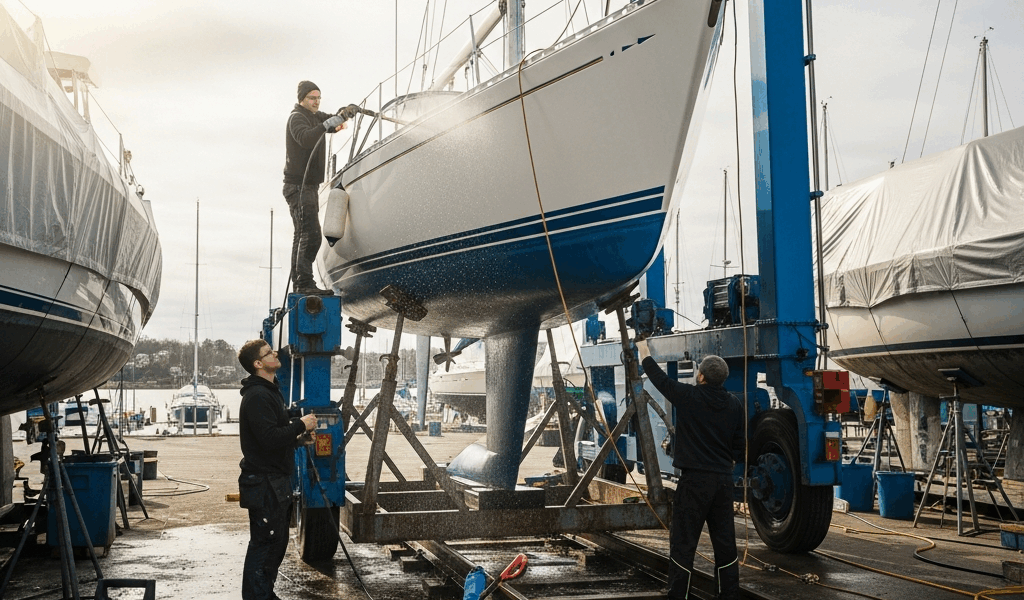
Start with the hull. Inspect the bottom paint for blistering, peeling, or heavy fouling buildup. If you hauled out in the fall, now is the time to apply fresh antifouling paint before splashing. Check through-hulls and seacocks — open and close each one to confirm they move freely. Replace any zincs that are more than 50 percent eroded.
Inspect the prop for dings, fishing line wrapped around the shaft, and any play in the cutless bearing. A worn cutless bearing vibrates at speed and accelerates shaft wear, so address it now rather than mid-season.
Engine and Mechanical Systems
Change the engine oil and filter even if you did it at haulout. Oil that sat all winter absorbs moisture and acids. Replace the fuel filter and water separator element. If you didn’t add fuel stabilizer in the fall, drain a sample from the bottom of the tank and check for water or dark sediment.
Inspect all belts for cracking and proper tension. Check coolant level and condition — if it looks rusty or hasn’t been flushed in two years, do a full coolant exchange. Test the raw water impeller by pulling the cover plate. If the vanes are stiff, cracked, or curled, swap it out. Keep the old one as a spare aboard.
For outboards, reconnect the battery and check the lower unit oil. Milky oil means water intrusion through a compromised seal — get that fixed before launching.
Electrical Systems
Charge your batteries fully, then load-test them. A battery that reads 12.6 volts but drops below 10 under load is done. Clean all terminal connections and apply dielectric grease. Test navigation lights, the horn, bilge pumps (both automatic float switch and manual override), and your VHF radio.
Check your shore power cord for corrosion on the prongs and any melting or discoloration at the plug ends — a leading cause of dock fires.
Safety Gear Audit
Pull every life jacket out and inspect it. Inflatable PFDs need their CO2 cartridges checked and the auto-inflate bobbin replaced if expired. Check flare expiration dates — expired flares can stay aboard as backups, but you need current ones to meet USCG requirements.
Test your fire extinguishers. The gauge should be in the green, and the powder inside shouldn’t be caked (flip it upside down and tap the bottom). Confirm your throwable PFD is accessible, not buried under dock lines.
Canvas, Lines, and Deck Hardware
Inspect all canvas for mildew, UV damage, and broken snaps or zippers. Clean with a marine canvas cleaner and re-waterproof if water no longer beads on the surface. Check dock lines and anchor rode for chafe — run every foot through your hands and feel for thin spots or stiffness.
Lubricate winches, windlasses, and any mechanical deck hardware. A few drops of the correct lubricant now prevents seized equipment when you need it most.
Systems Check on the Water
Once you launch, run the engine at idle and check for leaks at every hose connection, the exhaust elbow, and the raw water strainer. Cycle through your electronics — chartplotter, depth sounder, radar, AIS — and confirm GPS accuracy. Take a short shakedown cruise close to the marina before planning any distance runs.
Spring commissioning isn’t glamorous work, but a solid four to six hours now sets you up for a trouble-free season. Make a checklist, work through it methodically, and you’ll spend your weekends on the water instead of at the mechanic.



Stay in the loop
Get the latest passage maker mag updates delivered to your inbox.